
Tea · 3 min read
A Chinese Tea Table, Explained: Vessels and Everyday Practice
There is no single correct set of Chinese tea wares. Learn what a cup, gaiwan, teapot and serving pitcher do, then begin with only what you need.
BAI Atelier Editorial
A Chinese tea table does not have one fixed inventory. Tea is prepared and shared in homes, workplaces and teahouses, and the tools change with the tea, the place and the people at the table. For a beginner, it helps to ask what each vessel does before buying a complete set.
Begin with sharing
UNESCO describes Chinese tea traditions through growing, preparing, drinking and sharing tea, with practices shaped by local customs. A gongfu-style service is one expression of tea culture; a cup offered to a guest at home is another. Neither stands for every Chinese way of drinking tea.
To begin at home, choose a tea, a way to heat water, a vessel to brew in and a cup to drink from. That is enough to notice how the leaves change over successive infusions. Add another vessel when it solves a real task, such as sharing one brew among several people.
What each vessel does
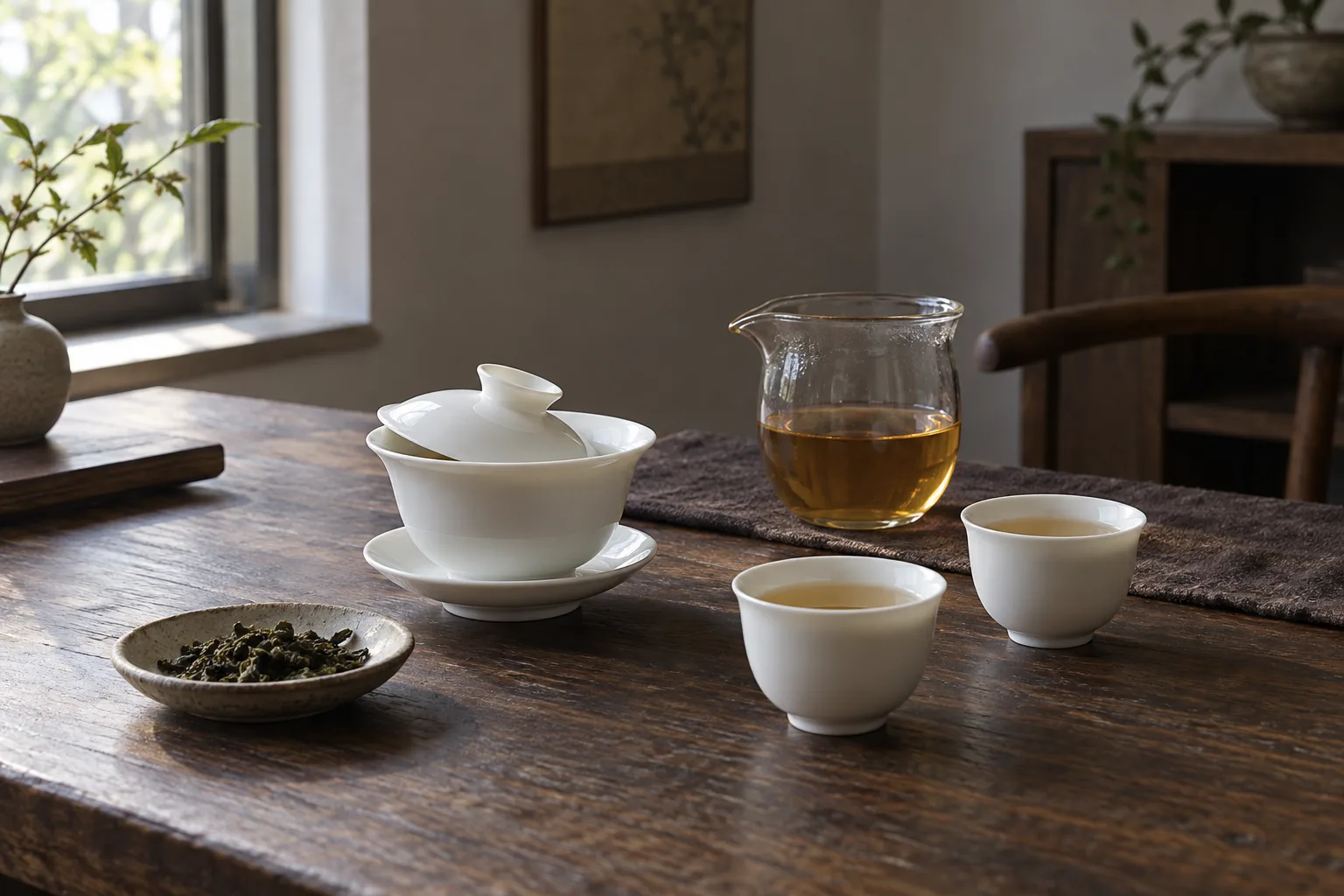
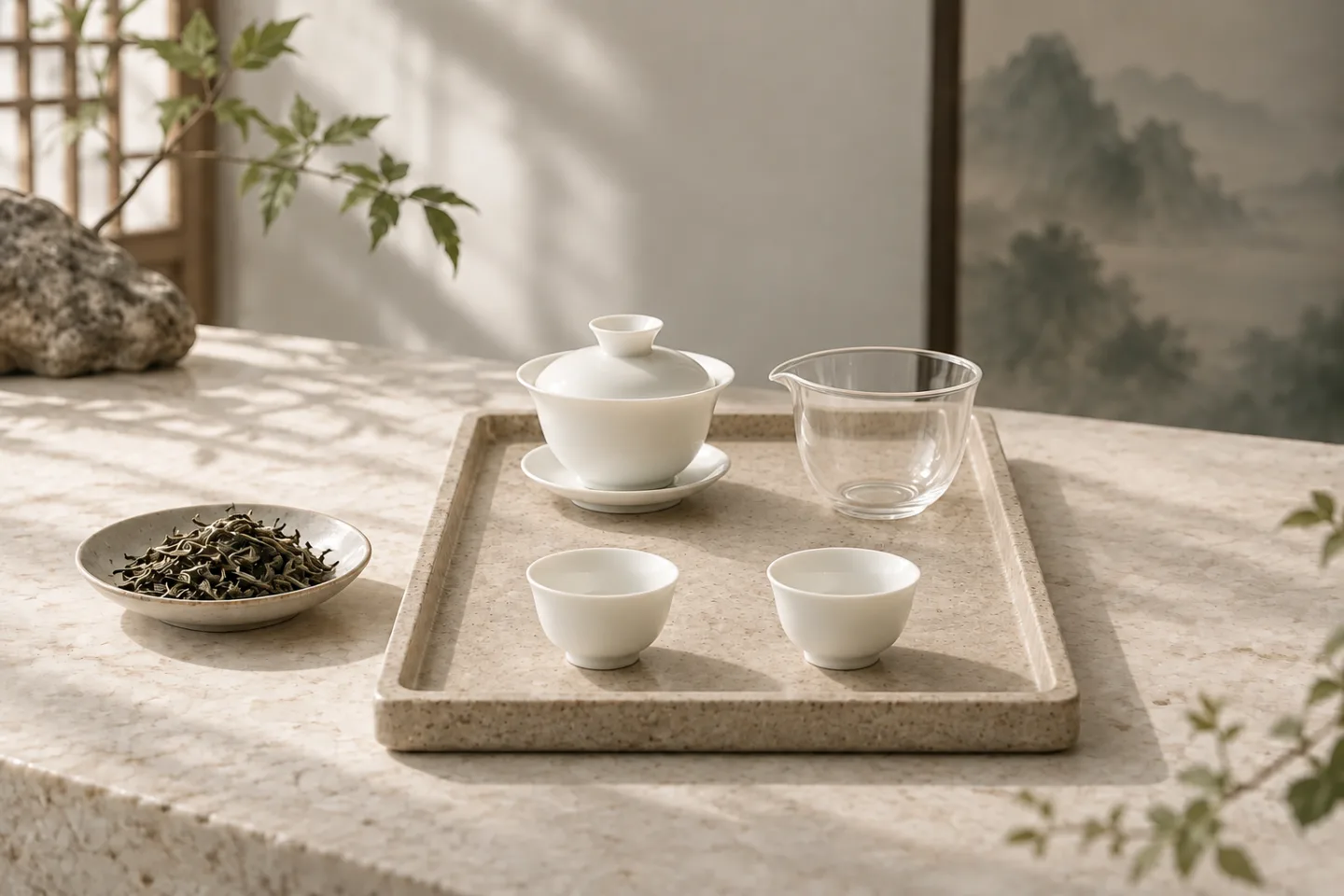
A lidded bowl, or gaiwan (盖碗), holds the leaves and water while its lid helps guide the pour. A teapot serves the same basic purpose in a different form. Cups bring the tea to the people at the table. A serving pitcher lets you pour one infusion into several cups more evenly; a tray can collect water during preparation. These additions suit some ways of serving tea, but they are not a test of authenticity.
A report published by the Fujian provincial government describes Xiamen's everyday 'tea tables' as places for conversation, sometimes with a gaiwan, serving pitcher and several cups. It is one local example of how vessels serve the people gathered around them, rather than a model for every region.
Learn the tea before expanding the table
Choose one tea and follow the preparation guidance from a reliable tea producer. Notice its aroma, colour and taste, then change one variable at a time on a later brew. Water temperature, leaf quantity and steeping time depend on the tea and your preference; there is no single number that works for every cup.
A simple table leaves room for conversation and attention. Once you know how you like to make and share tea, the next vessel becomes an informed choice rather than an obligatory purchase.
Sources
Keep reading

The Meaning of Scholar's Rocks in Chinese Culture

Inside a Jingdezhen Studio: Where Tradition Meets Today

A Beginner's Guide to Incense Rituals at Home
How Chinese Gardens Shape a View: Frames and Borrowed Scenery
What Are the Four Treasures of the Chinese Study?
How to Look at Empty Space in Chinese Landscape Painting
Incense Burner, Box and Tools: What Does Each Do?
The Craft of Wooden Windows in Suzhou Gardens
How to View a Chinese Handscroll
What Is Dougong in Chinese Architecture?
What Are Chenxiang and Guanxiang? A Guide to Chinese Agarwood
How Traditional Chinese Incense Is Made
How to Use Incense Sticks, Coils, Cones and Powder
The Six Types of Chinese Tea, Explained by Their Making
How to Brew Different Chinese Teas: Six Starting Points
How Jasmine Tea Gets Its Scent in Fuzhou
Why Does a Han Incense Burner Look Like a Mountain?
What Is Indirect Heating in Chinese Incense?
Chaozhou Gongfu Tea: A Regional Way of Serving Oolong
Song Dynasty Diancha: Tea Whisked in a Bowl
A Fragrant Pouch That Does Not Burn: Xuzhou Incense Sachets
How Did a Tang Incense Sphere Keep Its Cup Upright?
How Hand-Firing Shapes West Lake Longjing Tea
Why Is Roasting Part of Wuyi Rock Tea?
What Is Xiangzhuan, a Chinese Incense Seal?
Enshi Yulu: A Chinese Green Tea Fixed by Steam
Why Are Tieguanyin Leaves Shaken During Making?