
Incense · 4 min read
How to Use Incense Sticks, Coils, Cones and Powder
Different incense shapes need different supports. Identify the form first, then use a stable heat-resistant holder that catches ash and suits the maker's instructions.
BAI Atelier Editorial
A stick, coil, cone and loose powder cannot all be put into the same small holder. Chinese heritage records name these as different finished incense forms. A Chinese local fire authority advises a stable, fire-resistant base, clear space from combustibles and continuous supervision whenever incense is burning at home.
Match the form to the holder
- Stick incense (线香): seat one stick firmly in a holder designed for its thickness and length. Place it where the full fall of ash lands on a heat-resistant surface.
- Coil incense (盘香): use a stable coil support over a broad, non-combustible ash-catching dish. Leave clear space around the entire coil, not just its centre.
- Cone or tower incense (塔香): set it upright on a heat-resistant dish intended for that form. Check where the hot base and ash will rest as it burns down.
- Loose powder or incense-seal powder (香粉/篆香): follow the powder and burner maker's instructions. A stick holder is not a powder burner; avoid improvising with charcoal or unfamiliar heating equipment.
For any burning form, keep it away from paper, fabric, children and pets; ventilate the room, stay present, and extinguish it before leaving or sleeping. Wait until the holder and ash are completely cool before cleaning. If smoke is uncomfortable, stop and air the room. The existing beginner's guide covers a single-stick setup in more detail.
Sources
Keep reading

The Meaning of Scholar's Rocks in Chinese Culture

Inside a Jingdezhen Studio: Where Tradition Meets Today

A Beginner's Guide to Incense Rituals at Home
A Chinese Tea Table, Explained: Vessels and Everyday Practice
How Chinese Gardens Shape a View: Frames and Borrowed Scenery
What Are the Four Treasures of the Chinese Study?
How to Look at Empty Space in Chinese Landscape Painting
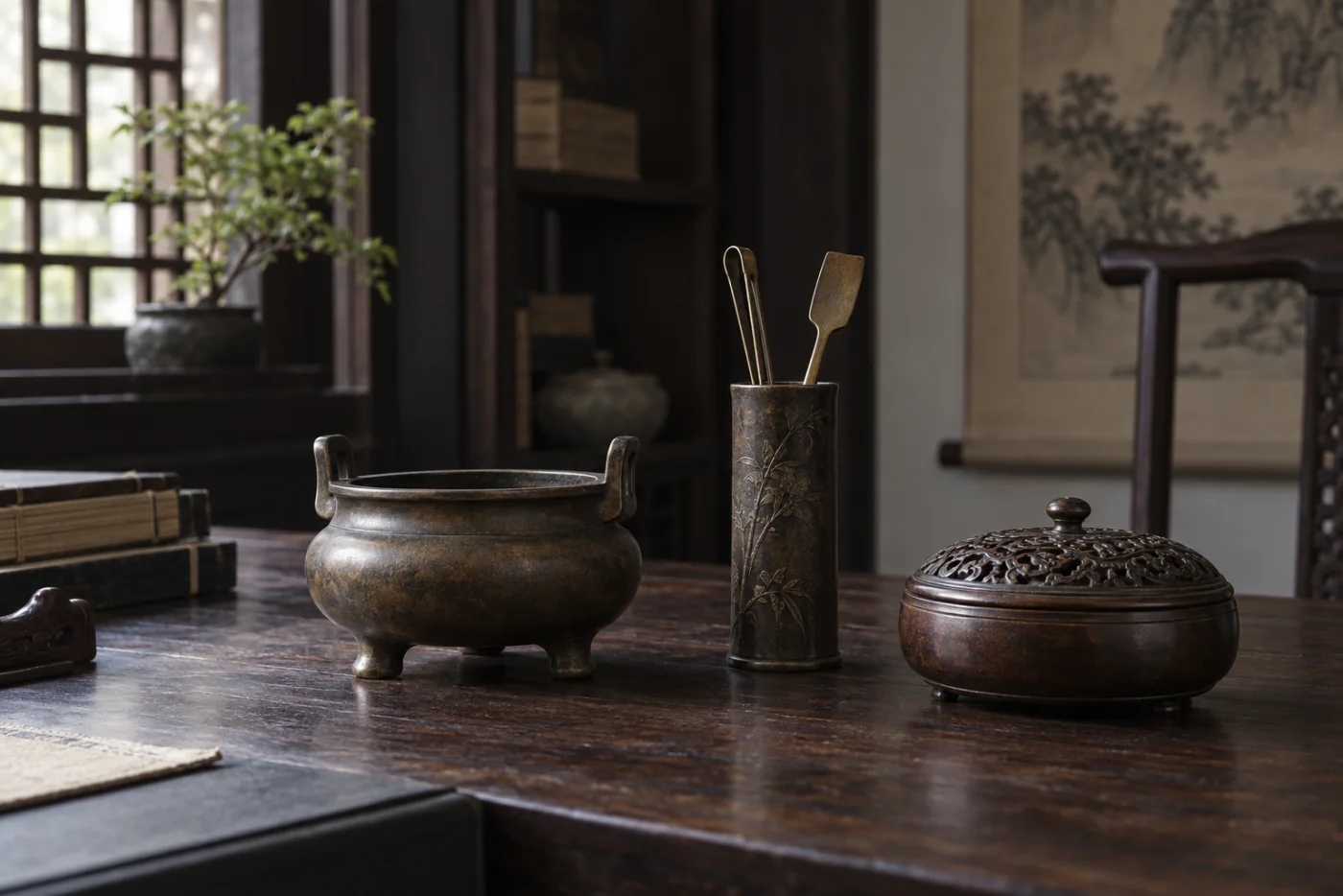
Incense Burner, Box and Tools: What Does Each Do?
The Craft of Wooden Windows in Suzhou Gardens
How to View a Chinese Handscroll
What Is Dougong in Chinese Architecture?
What Are Chenxiang and Guanxiang? A Guide to Chinese Agarwood
How Traditional Chinese Incense Is Made
The Six Types of Chinese Tea, Explained by Their Making
How to Brew Different Chinese Teas: Six Starting Points
How Jasmine Tea Gets Its Scent in Fuzhou
Why Does a Han Incense Burner Look Like a Mountain?
What Is Indirect Heating in Chinese Incense?
Chaozhou Gongfu Tea: A Regional Way of Serving Oolong
Song Dynasty Diancha: Tea Whisked in a Bowl
A Fragrant Pouch That Does Not Burn: Xuzhou Incense Sachets
How Did a Tang Incense Sphere Keep Its Cup Upright?
How Hand-Firing Shapes West Lake Longjing Tea
Why Is Roasting Part of Wuyi Rock Tea?
What Is Xiangzhuan, a Chinese Incense Seal?
Enshi Yulu: A Chinese Green Tea Fixed by Steam
Why Are Tieguanyin Leaves Shaken During Making?