
Landscape · 4 min read
How Chinese Gardens Shape a View: Frames and Borrowed Scenery
A doorway can frame a small garden; a distant hill can become part of it. Learn how position, openings and borrowed views guide the way a Chinese garden is seen.
BAI Atelier Editorial
A Chinese garden can change as you walk through it. A wall first hides part of the landscape; an opening selects a view; a pavilion offers a place to stop. These choices shape what you notice and when you notice it. They do not describe every garden in China, but they offer a useful way to look at gardens designed around a sequence of views.
A frame gives a view an edge
Look through a doorway or window and notice what falls inside its border: perhaps a rock, a branch, or water. The opening does not create those things, but it changes their relationship. Move a few steps and the composition changes again. The Suzhou Municipal Bureau of Gardens describes open doorways and windows as frames that offer visitors a succession of views; pavilions also provide places from which to look.
This is why the path matters as much as the view from any single seat. An opening can reveal one part of a garden while keeping another out of sight. The next turn may make a familiar rock look different. The garden is experienced over time, rather than understood in one glance.
Borrowed scenery reaches beyond the wall
Borrowed scenery, or jiejing (借景), draws a view beyond the immediate scene into the composition; sometimes that view lies outside the garden wall. It may be distant, nearby, seen from above, or noticed at a particular season. The Suzhou Municipal Bureau of Gardens describes these different ways of borrowing a view in its account of garden architecture.
At Suzhou's Canglang Pavilion, the garden bureau describes a corridor beside the water whose openwork windows connect the garden to a stream outside it. The stream is beyond the boundary, yet it becomes part of the visitor's view. This is one documented example of borrowed scenery, not a rule that every garden must have an external view.
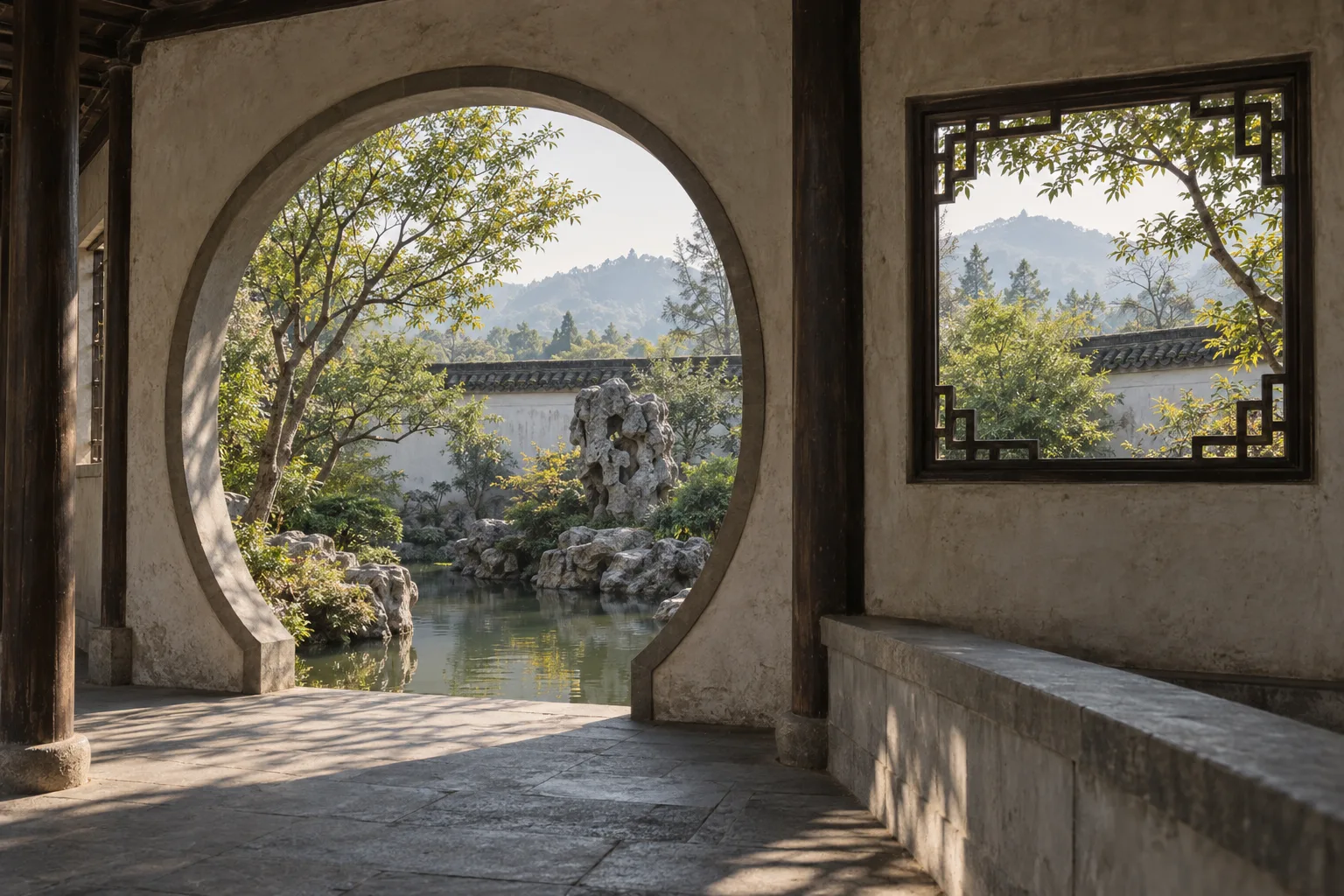
A landscape at another scale
Rocks can suggest mountains at a scale close enough to study. A study of garden imagery published by Beijing's Palace Museum notes the relationship between garden making, painting and imagined mountains. The point is not to mistake a stone for an actual mountain, but to see how its openings and contours invite the eye to travel.
A way to look on your next visit
Pause at one opening. Notice the foreground, the edge that frames it, and anything visible beyond the garden. Then move and look again. What disappeared? What entered the view? This simple exercise makes the garden's changing composition easier to see without requiring a checklist of supposedly essential features.
Sources
Keep reading

The Meaning of Scholar's Rocks in Chinese Culture

Inside a Jingdezhen Studio: Where Tradition Meets Today

A Beginner's Guide to Incense Rituals at Home
A Chinese Tea Table, Explained: Vessels and Everyday Practice
What Are the Four Treasures of the Chinese Study?
How to Look at Empty Space in Chinese Landscape Painting
Incense Burner, Box and Tools: What Does Each Do?
The Craft of Wooden Windows in Suzhou Gardens
How to View a Chinese Handscroll
What Is Dougong in Chinese Architecture?
What Are Chenxiang and Guanxiang? A Guide to Chinese Agarwood
How Traditional Chinese Incense Is Made
How to Use Incense Sticks, Coils, Cones and Powder
The Six Types of Chinese Tea, Explained by Their Making
How to Brew Different Chinese Teas: Six Starting Points
How Jasmine Tea Gets Its Scent in Fuzhou
Why Does a Han Incense Burner Look Like a Mountain?
What Is Indirect Heating in Chinese Incense?
Chaozhou Gongfu Tea: A Regional Way of Serving Oolong
Song Dynasty Diancha: Tea Whisked in a Bowl
A Fragrant Pouch That Does Not Burn: Xuzhou Incense Sachets
How Did a Tang Incense Sphere Keep Its Cup Upright?
How Hand-Firing Shapes West Lake Longjing Tea
Why Is Roasting Part of Wuyi Rock Tea?
What Is Xiangzhuan, a Chinese Incense Seal?
Enshi Yulu: A Chinese Green Tea Fixed by Steam
Why Are Tieguanyin Leaves Shaken During Making?