
Tea · History · 4 min read
Song Dynasty Diancha: Tea Whisked in a Bowl
Diancha starts with fine tea powder in a bowl: water is added and the mixture is worked with a whisk or spoon. It differs from steeping loose leaves.
BAI Atelier Editorial
A National Museum of China object note explains Song-period diancha (点茶) as preparing finely ground tea in a bowl. A little hot water first brings the powder together; more water is added while a tea whisk or spoon works the liquid. The tea is then drunk from the bowl, rather than poured off from loose leaves.
Read the tools as a sequence
The National Museum note names a tea grinder, sieve, bowl and water vessel among Song tea utensils. A Nanjing educational account adds tools for breaking cake tea and whisking the bowl. Together these records show why a bowl and whisk alone tell only the final part of the story: preparing the tea powder came first.
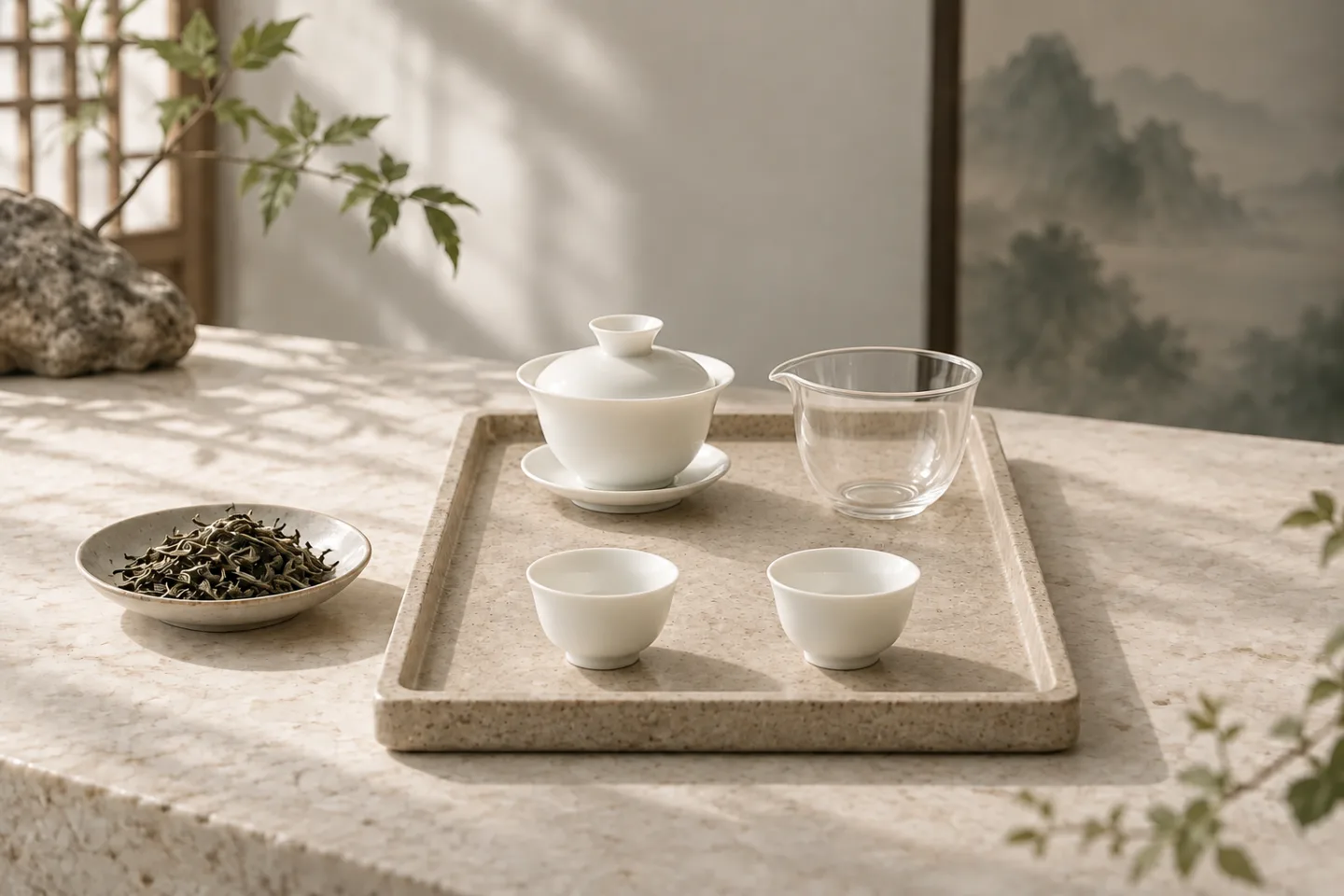
The method was prominent in the Song period, yet a museum object does not tell us that every household used the same tools or recipe. For a visual reference, see the actual excavated tea equipment linked below. The cover image here is only a contemporary tea atmosphere, not a reconstruction of a Song setting.
Sources
Keep reading

The Meaning of Scholar's Rocks in Chinese Culture

Inside a Jingdezhen Studio: Where Tradition Meets Today

A Beginner's Guide to Incense Rituals at Home
A Chinese Tea Table, Explained: Vessels and Everyday Practice
How Chinese Gardens Shape a View: Frames and Borrowed Scenery
What Are the Four Treasures of the Chinese Study?
How to Look at Empty Space in Chinese Landscape Painting
Incense Burner, Box and Tools: What Does Each Do?
The Craft of Wooden Windows in Suzhou Gardens
How to View a Chinese Handscroll
What Is Dougong in Chinese Architecture?
What Are Chenxiang and Guanxiang? A Guide to Chinese Agarwood
How Traditional Chinese Incense Is Made
How to Use Incense Sticks, Coils, Cones and Powder
The Six Types of Chinese Tea, Explained by Their Making
How to Brew Different Chinese Teas: Six Starting Points
How Jasmine Tea Gets Its Scent in Fuzhou
Why Does a Han Incense Burner Look Like a Mountain?
What Is Indirect Heating in Chinese Incense?
Chaozhou Gongfu Tea: A Regional Way of Serving Oolong
A Fragrant Pouch That Does Not Burn: Xuzhou Incense Sachets
How Did a Tang Incense Sphere Keep Its Cup Upright?
How Hand-Firing Shapes West Lake Longjing Tea
Why Is Roasting Part of Wuyi Rock Tea?
What Is Xiangzhuan, a Chinese Incense Seal?
Enshi Yulu: A Chinese Green Tea Fixed by Steam
Why Are Tieguanyin Leaves Shaken During Making?