
Painting · 3 min read
How to View a Chinese Handscroll
A handscroll is read across a changing view, not taken in at once. Its format helps explain why a painted journey unfolds in time.
BAI Atelier Editorial
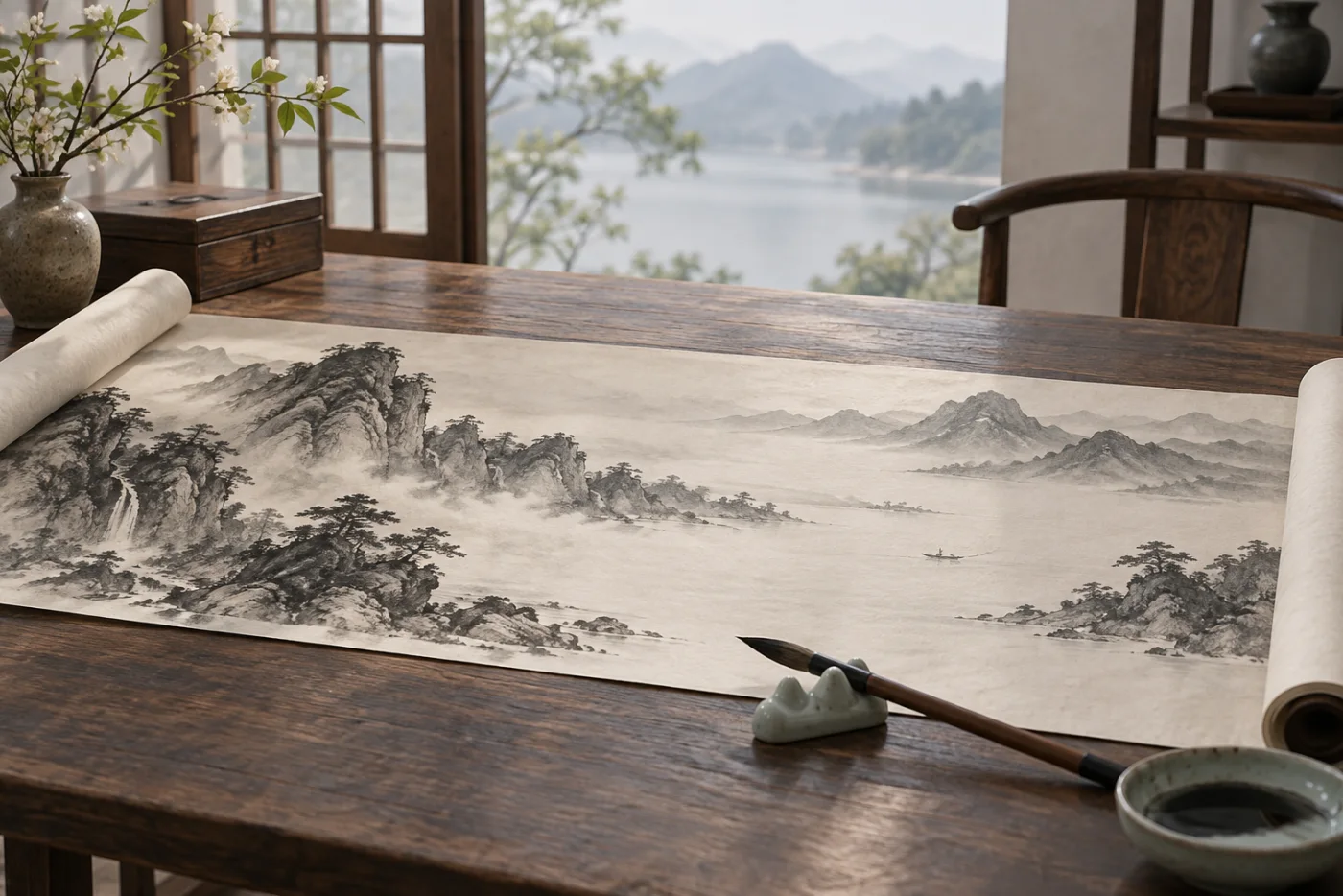
A Chinese handscroll, or shoujuan (手卷), is a horizontal format for painting or calligraphy. The Palace Museum describes it as displayed from right to left and suited to viewing at a desk. Only part of a long work is in front of the viewer at a given moment; the rest is still rolled or has already passed by.
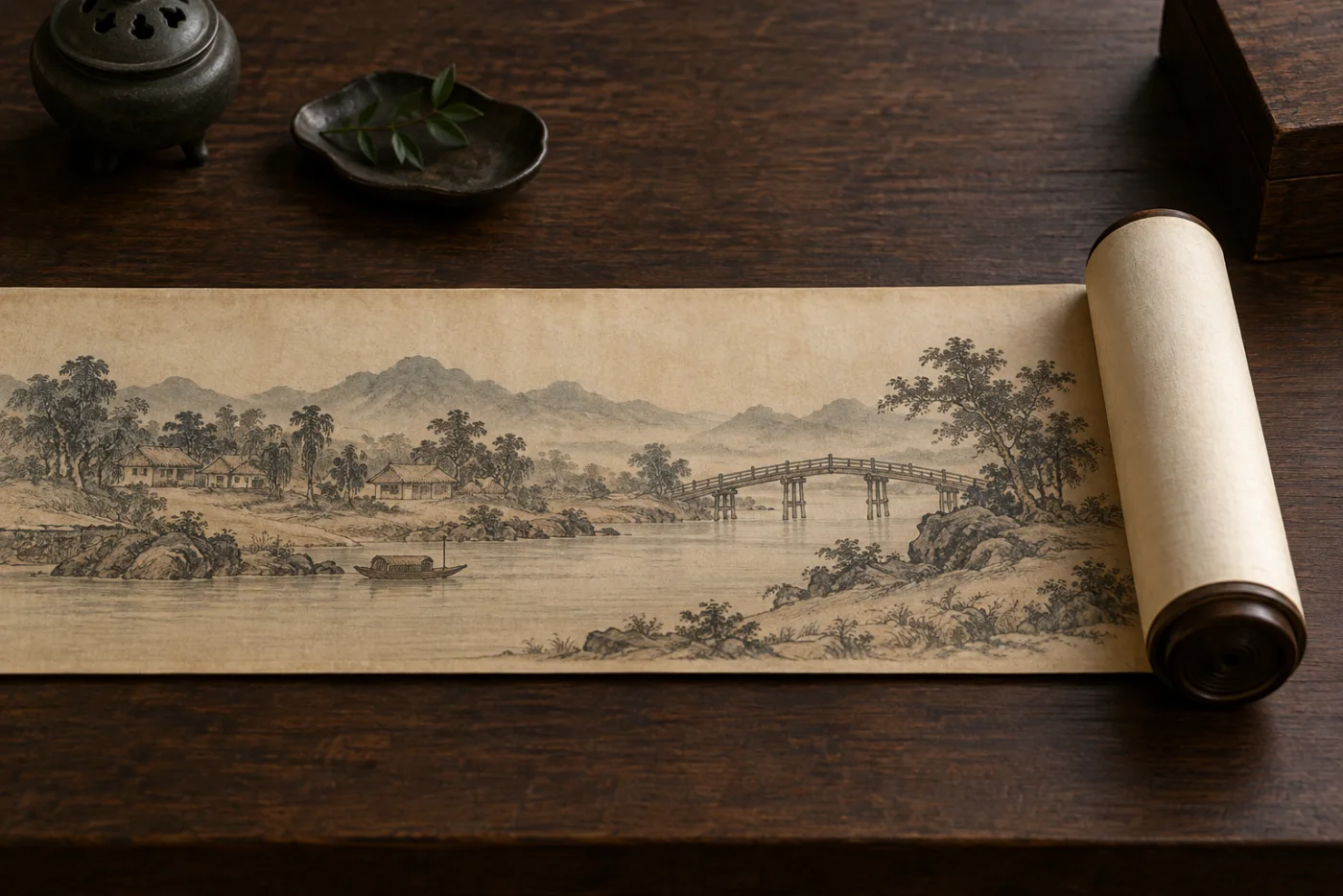
The scene changes as the scroll opens
The format lets a viewer encounter one stretch of a painting, then another. A riverbank might give way to a bridge, then to buildings. This is not a rule that every scroll tells a story, but it changes the way a long image can be experienced: looking has a direction and takes time.
The Palace Museum's record for Zhang Zeduan's Along the River During the Qingming Festival (《清明上河图》) describes a long composition containing open country, river, city structures and many small human activities. It also identifies the work as a handscroll. The example shows how varied scenes can be organized within one continuous work; it is not the imaginary painting in our illustration.
Try a slower digital viewing
If a museum offers a high-resolution digital scroll, begin at the right edge and move across it in short sections. Notice what enters and leaves the frame, where your attention stops, and whether a later detail changes your sense of an earlier one. A full-screen overview is useful too, but it answers a different question from the sequential view.
Sources
Keep reading

The Meaning of Scholar's Rocks in Chinese Culture

Inside a Jingdezhen Studio: Where Tradition Meets Today

A Beginner's Guide to Incense Rituals at Home
A Chinese Tea Table, Explained: Vessels and Everyday Practice
How Chinese Gardens Shape a View: Frames and Borrowed Scenery
What Are the Four Treasures of the Chinese Study?
How to Look at Empty Space in Chinese Landscape Painting
Incense Burner, Box and Tools: What Does Each Do?
The Craft of Wooden Windows in Suzhou Gardens
What Is Dougong in Chinese Architecture?
What Are Chenxiang and Guanxiang? A Guide to Chinese Agarwood
How Traditional Chinese Incense Is Made
How to Use Incense Sticks, Coils, Cones and Powder
The Six Types of Chinese Tea, Explained by Their Making
How to Brew Different Chinese Teas: Six Starting Points
How Jasmine Tea Gets Its Scent in Fuzhou
Why Does a Han Incense Burner Look Like a Mountain?
What Is Indirect Heating in Chinese Incense?
Chaozhou Gongfu Tea: A Regional Way of Serving Oolong
Song Dynasty Diancha: Tea Whisked in a Bowl
A Fragrant Pouch That Does Not Burn: Xuzhou Incense Sachets
How Did a Tang Incense Sphere Keep Its Cup Upright?
How Hand-Firing Shapes West Lake Longjing Tea
Why Is Roasting Part of Wuyi Rock Tea?
What Is Xiangzhuan, a Chinese Incense Seal?
Enshi Yulu: A Chinese Green Tea Fixed by Steam
Why Are Tieguanyin Leaves Shaken During Making?