
Incense · Form · 3 min read
What Is Xiangzhuan, a Chinese Incense Seal?
An incense seal makes a continuous line of powder into a character or pattern. The mould shapes the path that burns; it is not the fuel itself.
BAI Atelier Editorial
Xiangzhuan (香篆), also called yinxiang (印香), uses a pierced mould to arrange incense powder on a bed of ash. A Guangzhou district cultural workshop describes pressing the powder into a connected character or motif, lifting the mould, and lighting one end. The ember then follows the powder line. The practice is about the relationship between a pattern and a slow burn, not about burning a metal stencil.
A Shanghai district course description likewise shows the powder laid on ash as connected writing or a design. The two modern teaching accounts explain the basic method, but they do not establish that every old incense seal had the same pattern, ingredients or ceremonial role. A seal's visual appeal does not tell you the composition of its powder.
This remains a live ember on a heat-resistant surface. Use a purpose-made burner and the powder maker's directions, keep it away from flammable objects, and stay present until it is fully extinguished. For the broader differences between powder, sticks and coils, see the site's guide to incense forms.
Sources
Keep reading

The Meaning of Scholar's Rocks in Chinese Culture

Inside a Jingdezhen Studio: Where Tradition Meets Today

A Beginner's Guide to Incense Rituals at Home
A Chinese Tea Table, Explained: Vessels and Everyday Practice
How Chinese Gardens Shape a View: Frames and Borrowed Scenery
What Are the Four Treasures of the Chinese Study?
How to Look at Empty Space in Chinese Landscape Painting
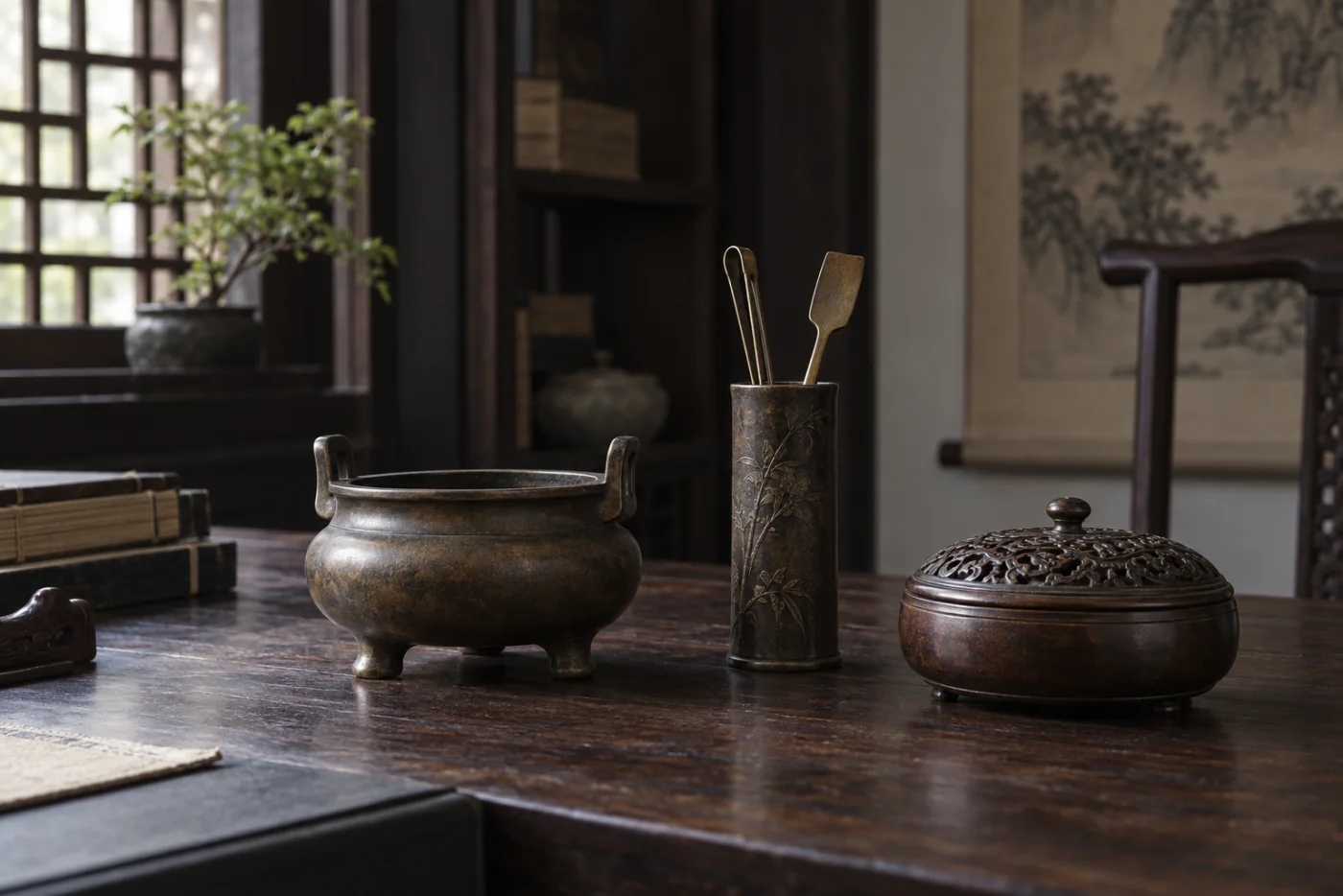
Incense Burner, Box and Tools: What Does Each Do?
The Craft of Wooden Windows in Suzhou Gardens
How to View a Chinese Handscroll
What Is Dougong in Chinese Architecture?
What Are Chenxiang and Guanxiang? A Guide to Chinese Agarwood
How Traditional Chinese Incense Is Made
How to Use Incense Sticks, Coils, Cones and Powder
The Six Types of Chinese Tea, Explained by Their Making
How to Brew Different Chinese Teas: Six Starting Points
How Jasmine Tea Gets Its Scent in Fuzhou
Why Does a Han Incense Burner Look Like a Mountain?
What Is Indirect Heating in Chinese Incense?
Chaozhou Gongfu Tea: A Regional Way of Serving Oolong
Song Dynasty Diancha: Tea Whisked in a Bowl
A Fragrant Pouch That Does Not Burn: Xuzhou Incense Sachets
How Did a Tang Incense Sphere Keep Its Cup Upright?
How Hand-Firing Shapes West Lake Longjing Tea
Why Is Roasting Part of Wuyi Rock Tea?
Enshi Yulu: A Chinese Green Tea Fixed by Steam
Why Are Tieguanyin Leaves Shaken During Making?