
Tea · Making · 4 min
What Does Withering Do in Fuding White Tea?
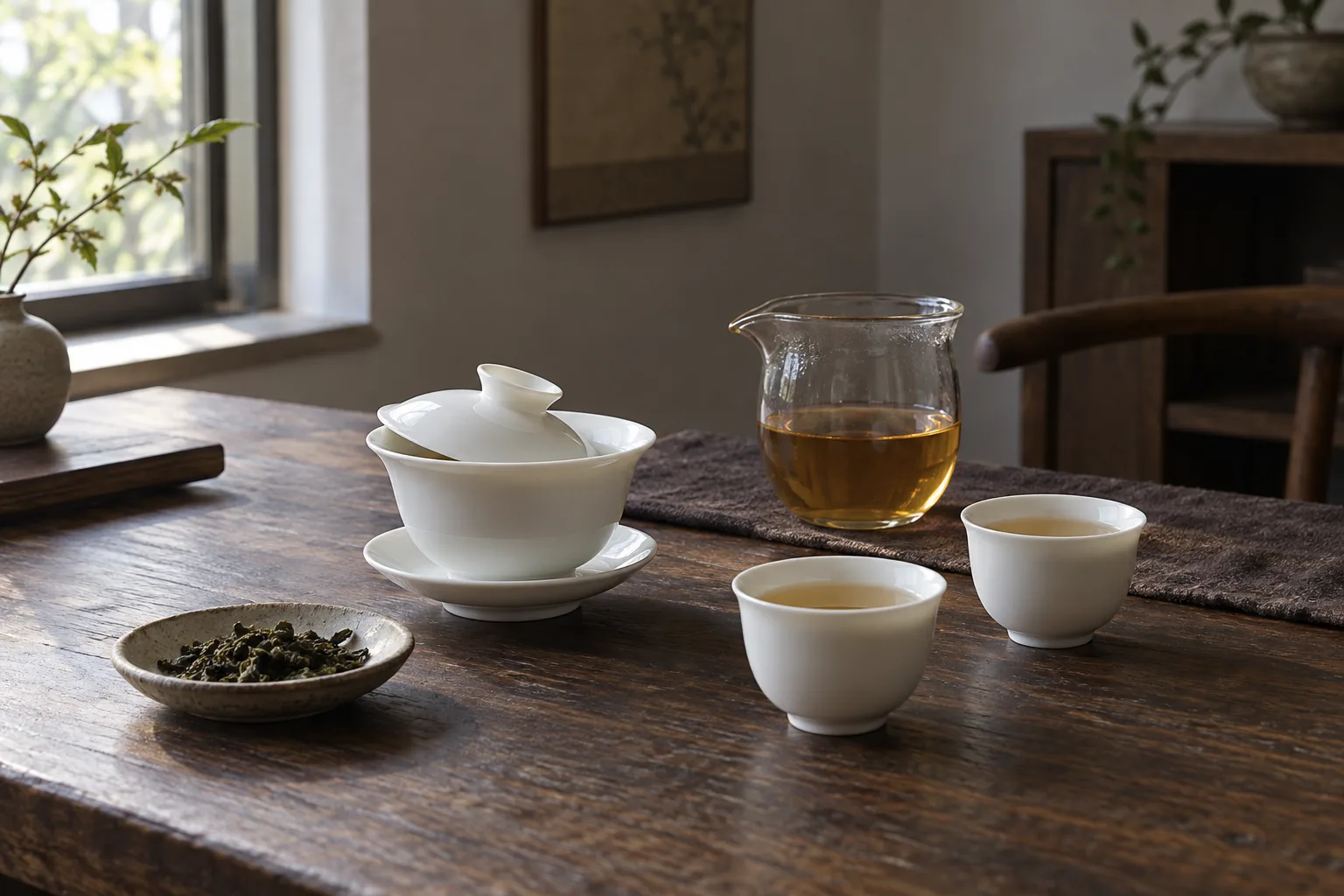
Fuding white tea is shaped by withering and drying. ‘Not pan-fired or rolled’ does not mean the leaves are simply abandoned to dry.
Essays on the objects we carry, the people who make them, and the small daily rituals they belong to.
Tea · Making · 4 min
Fuding white tea is shaped by withering and drying. ‘Not pan-fired or rolled’ does not mean the leaves are simply abandoned to dry.
Tea · Making · 4 min
Shaking is one part of Anxi Tieguanyin's leaf-handling sequence. The maker watches the leaf and weather before applying heat to stop further change.
Tea · Process comparison · 4 min
Enshi Yulu and West Lake Longjing are both green teas, yet their recorded early heat treatments differ: steam for one, a pan for the other.

Incense · Form · 3 min
An incense seal makes a continuous line of powder into a character or pattern. The mould shapes the path that burns; it is not the fuel itself.
Tea · Making · 4 min
In the recorded Wuyi rock tea tradition, prolonged lower-temperature baking is one of several connected making stages. Roast alone does not explain the tea.
Tea · Making · 4 min
West Lake Longjing is a green tea shaped through a local pan-firing tradition. The work changes both the leaf's processing path and its familiar flat form.
Incense · Object study · 4 min
A Tang silver incense sphere used nested moving rings to keep its inner cup level while the outer ball turned.
Incense · Textile craft · 4 min
A Xuzhou xiangbao carries fragrant material inside an embroidered pouch. Its scent comes without lighting the object.
Tea · History · 4 min
Diancha starts with fine tea powder in a bowl: water is added and the mixture is worked with a whisk or spoon. It differs from steeping loose leaves.
Tea · Living tradition · 4 min
Chaozhou gongfu tea is a documented Chaoshan custom centred on preparing and sharing oolong tea; its formal sequence is one record of a living practice.
Incense · Method · 4 min
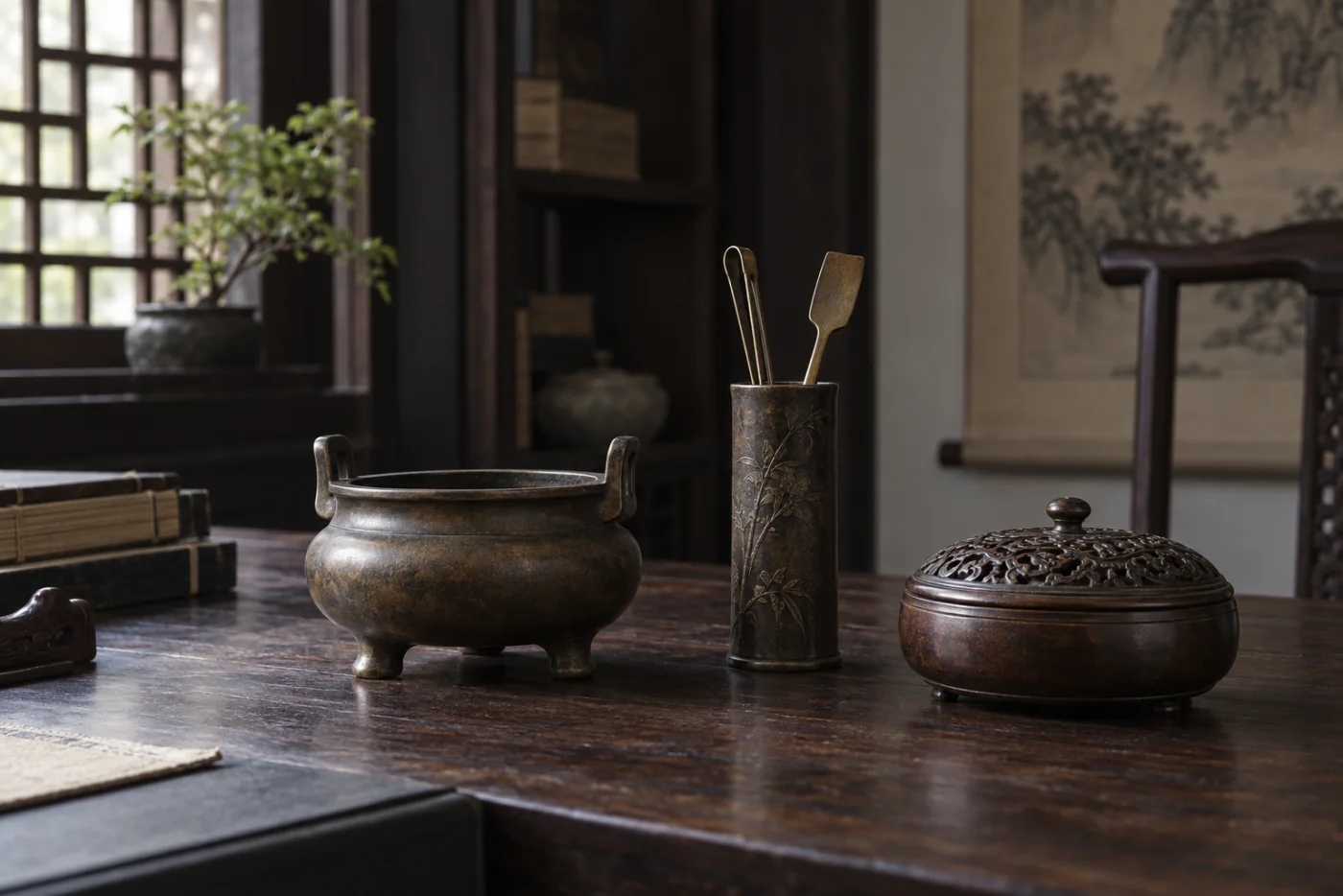
Gehuo xunxiang places a barrier between a heated source and aromatic material. The distinction explains why it is not the same as lighting a stick.
Incense · Object study · 4 min
The mountain-shaped lid of a boshanlu made drifting incense smoke part of a Han vision of an immortal landscape.
Tea · 3 min
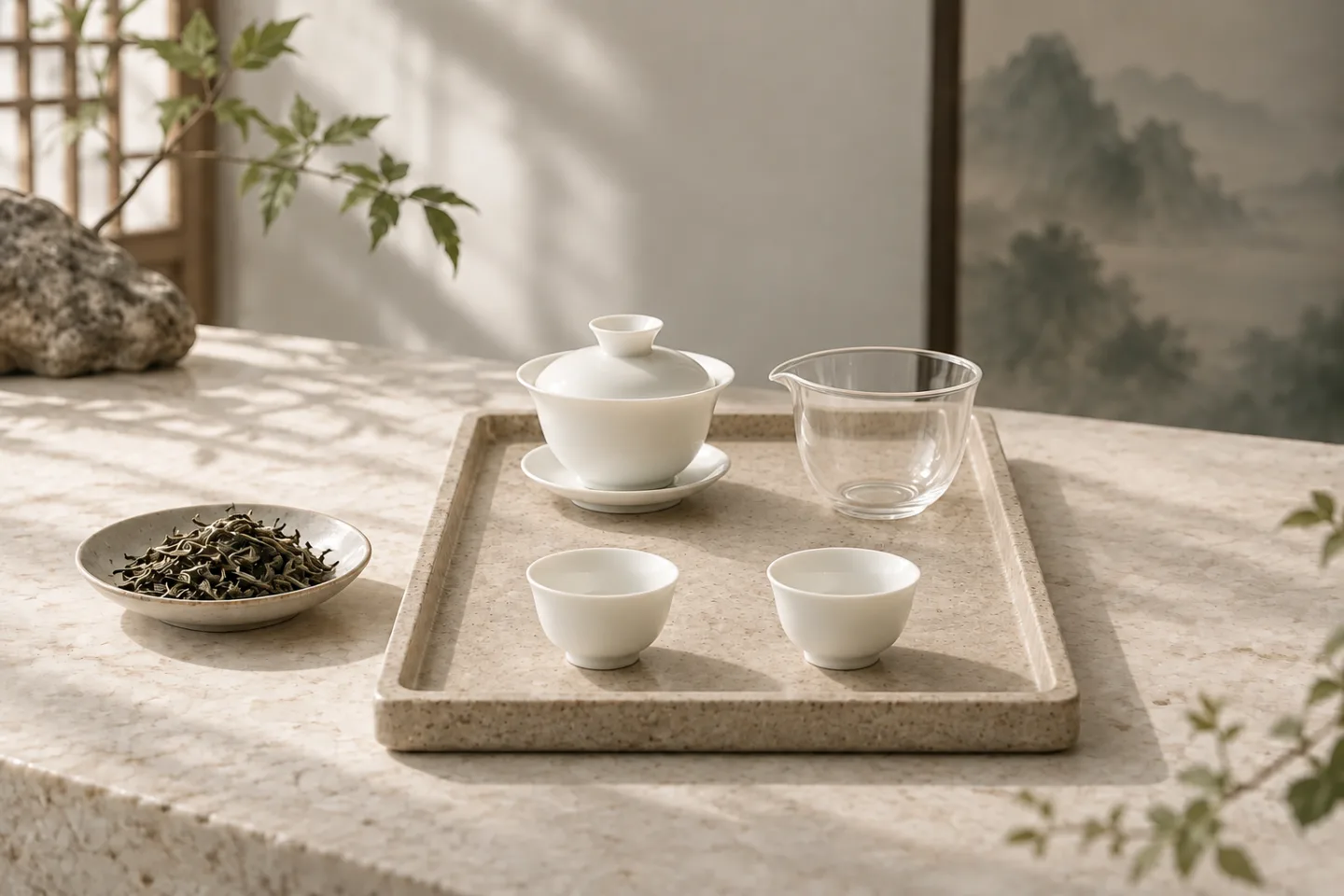
Fuzhou jasmine tea is made by bringing prepared tea and fresh flowers together, then separating them. The fragrance is made in the tea, not simply scattered on top.
Tea · 5 min
There is no universal water temperature or steeping time. Start with the tea's processing style, the producer's advice and the vessel you actually use.
Tea · 4 min
Green, white, yellow, oolong, red and dark teas are differentiated chiefly by processing. Leaf colour or an English label alone can mislead.
Incense · 4 min
Different incense shapes need different supports. Identify the form first, then use a stable heat-resistant holder that catches ash and suits the maker's instructions.
Craft · 3 min
Follow one documented Fujian tradition from aromatic material to a finished form, without treating it as the recipe for every Chinese incense.
Incense · 3 min
Agarwood is a fragrant material from a tree; guanxiang is a Dongguan tradition within that larger story. The names describe different things.
Architecture · 3 min
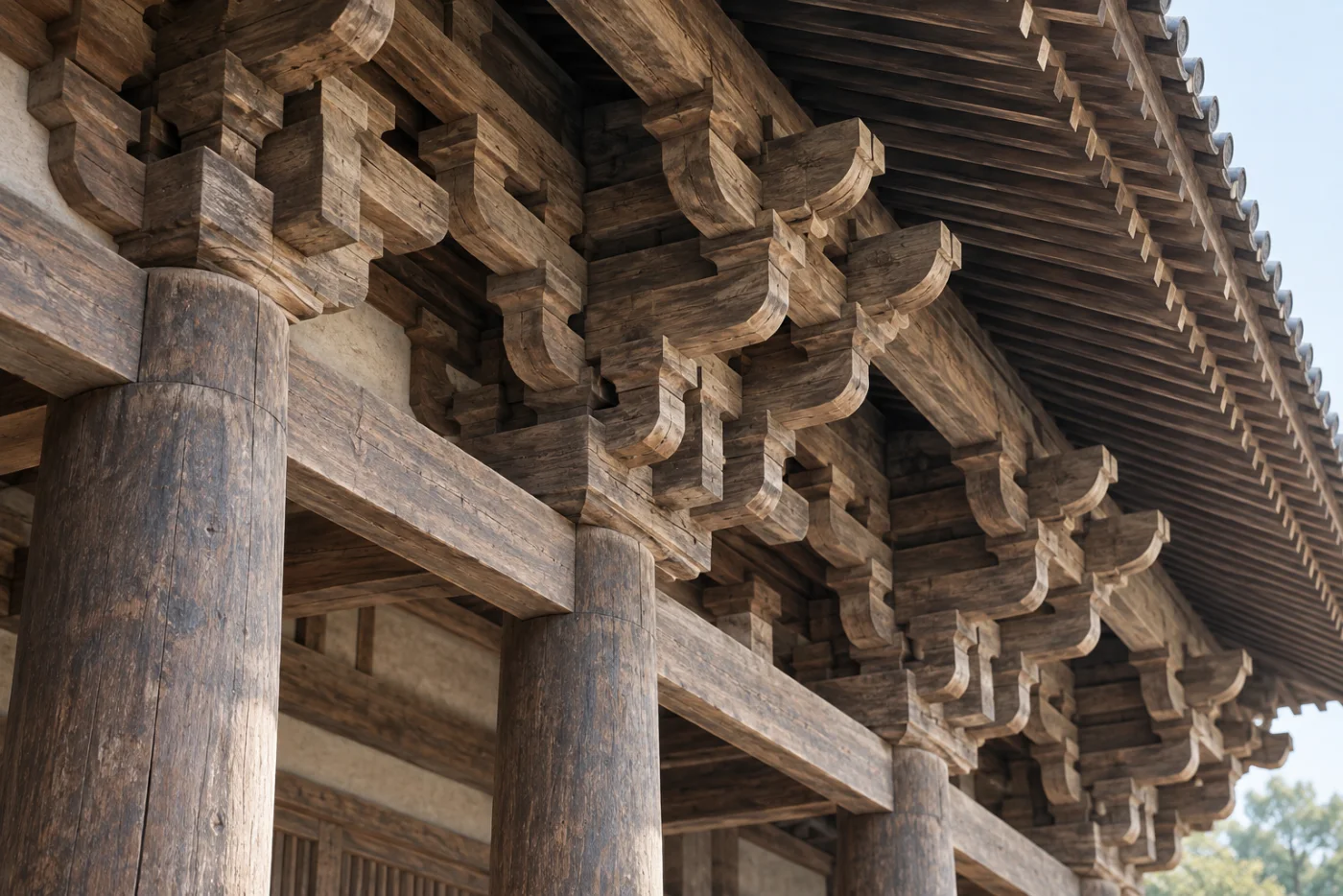
Dougong is a layered bracket assembly under the eaves of some Chinese timber buildings. Its role and appearance changed over time.
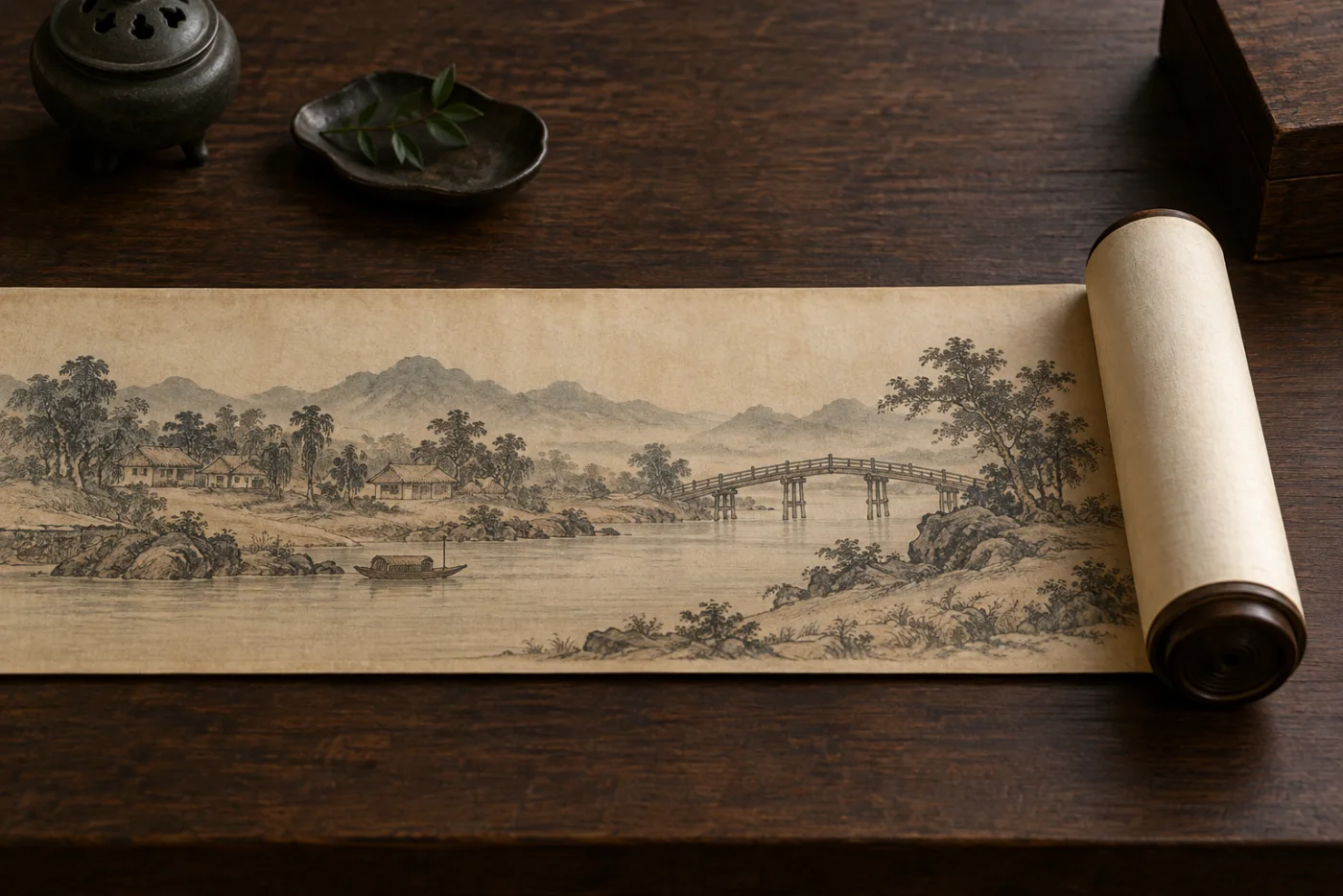
Painting · 3 min
A handscroll is read across a changing view, not taken in at once. Its format helps explain why a painted journey unfolds in time.
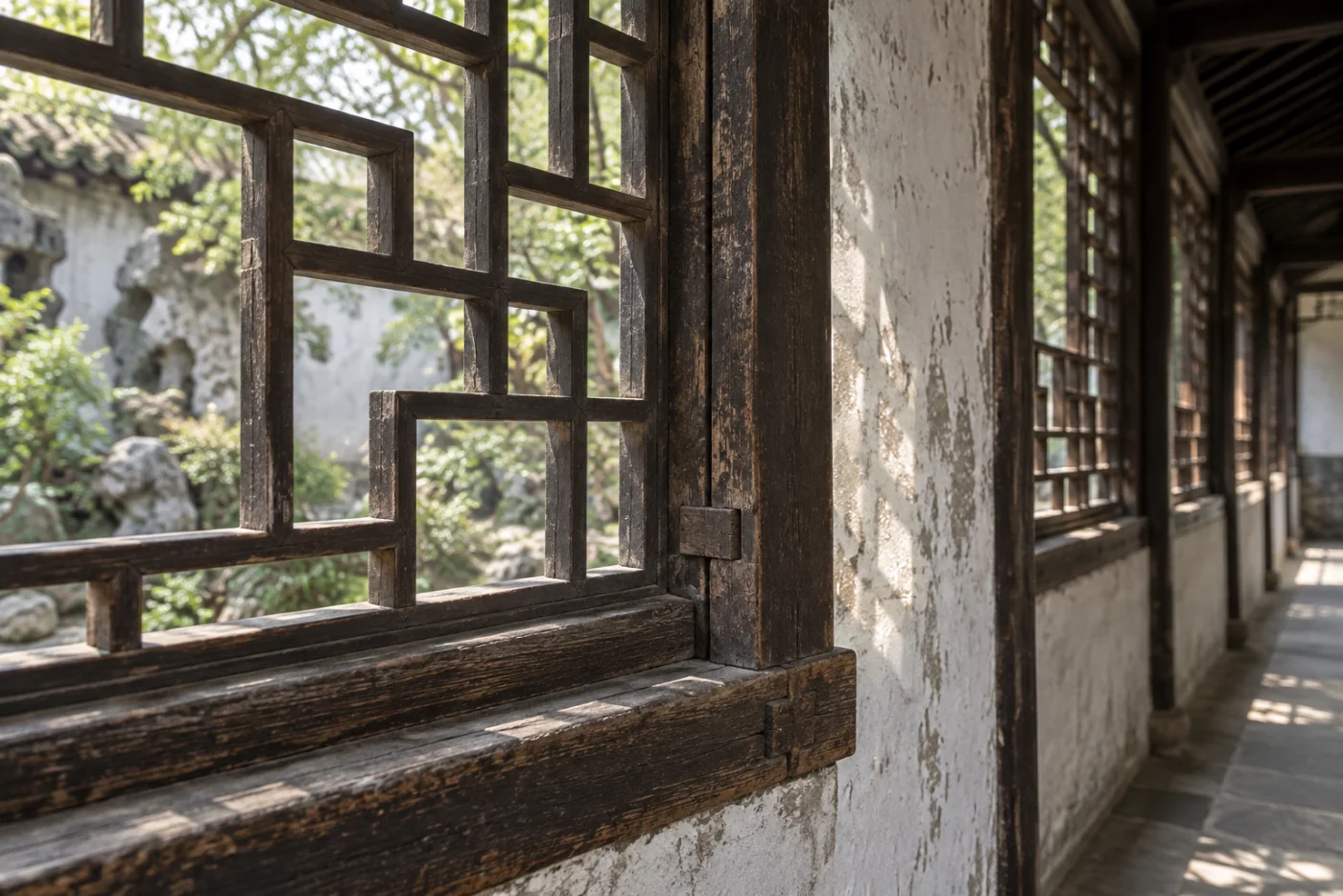
Architecture · 4 min
Wooden windows in Suzhou gardens manage light, air and movement as well as the view. Their construction is part of the experience.
Incense · 3 min
Historic incense vessels did different jobs. A burner held the fire, a box stored fragrant material, and utensils helped tend it.
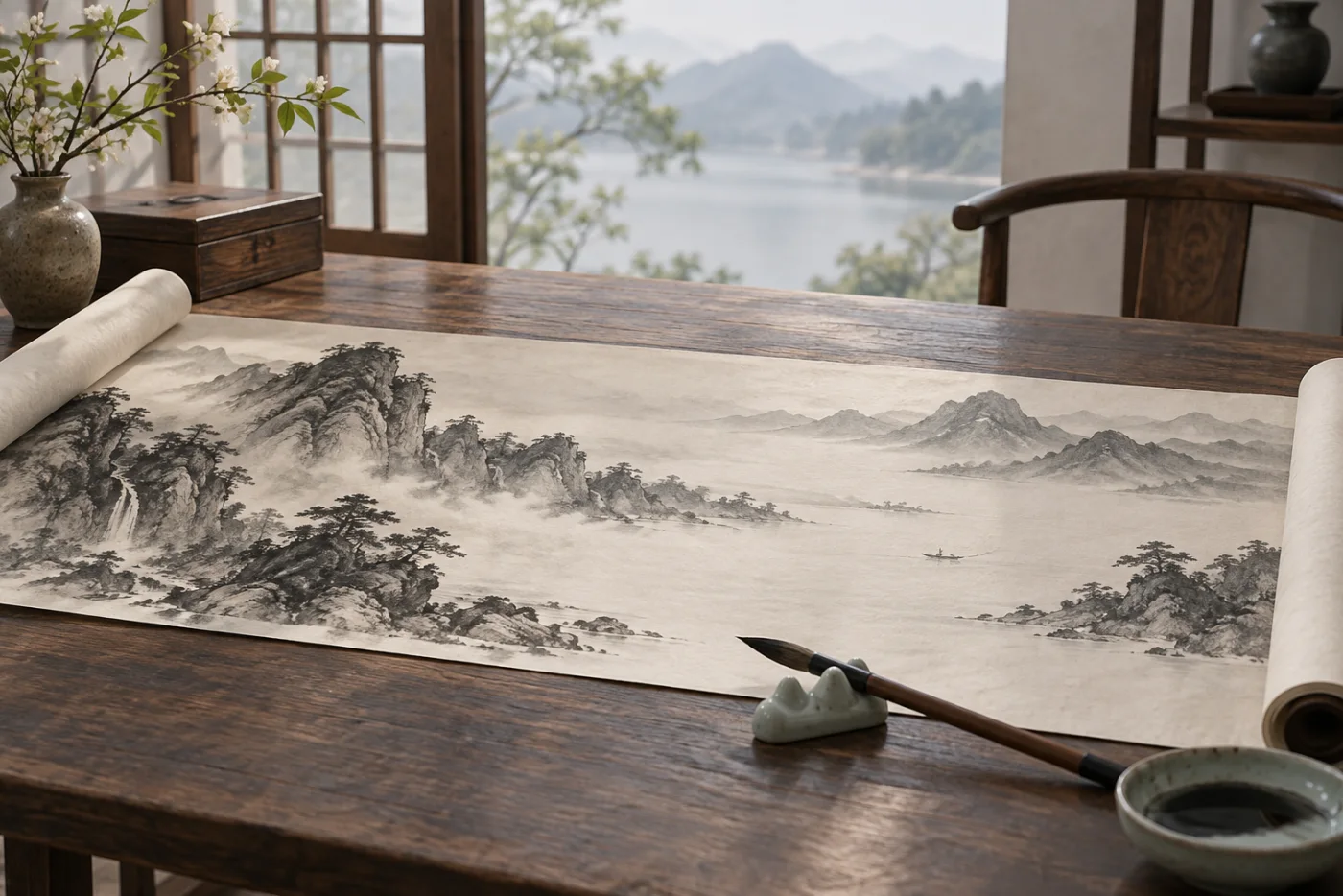
Landscape · 3 min
An unpainted passage can suggest water or mist and give mountains room to recede. One Palace Museum painting offers a concrete way to see it.
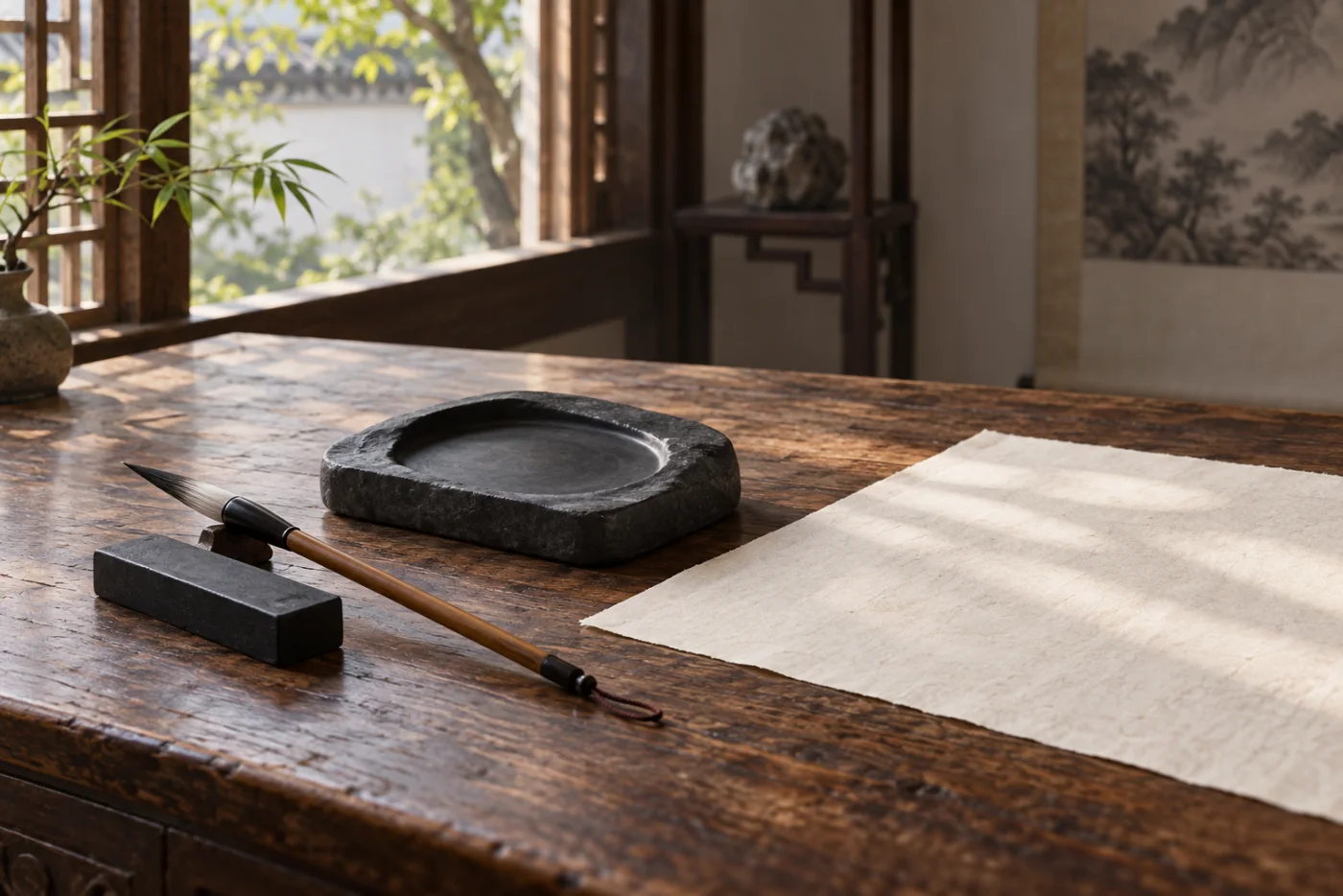
Study · 3 min
Brush, ink, paper and inkstone are the four essentials of the traditional scholar's desk. Here is what each contributes to writing and painting.
Landscape · 4 min
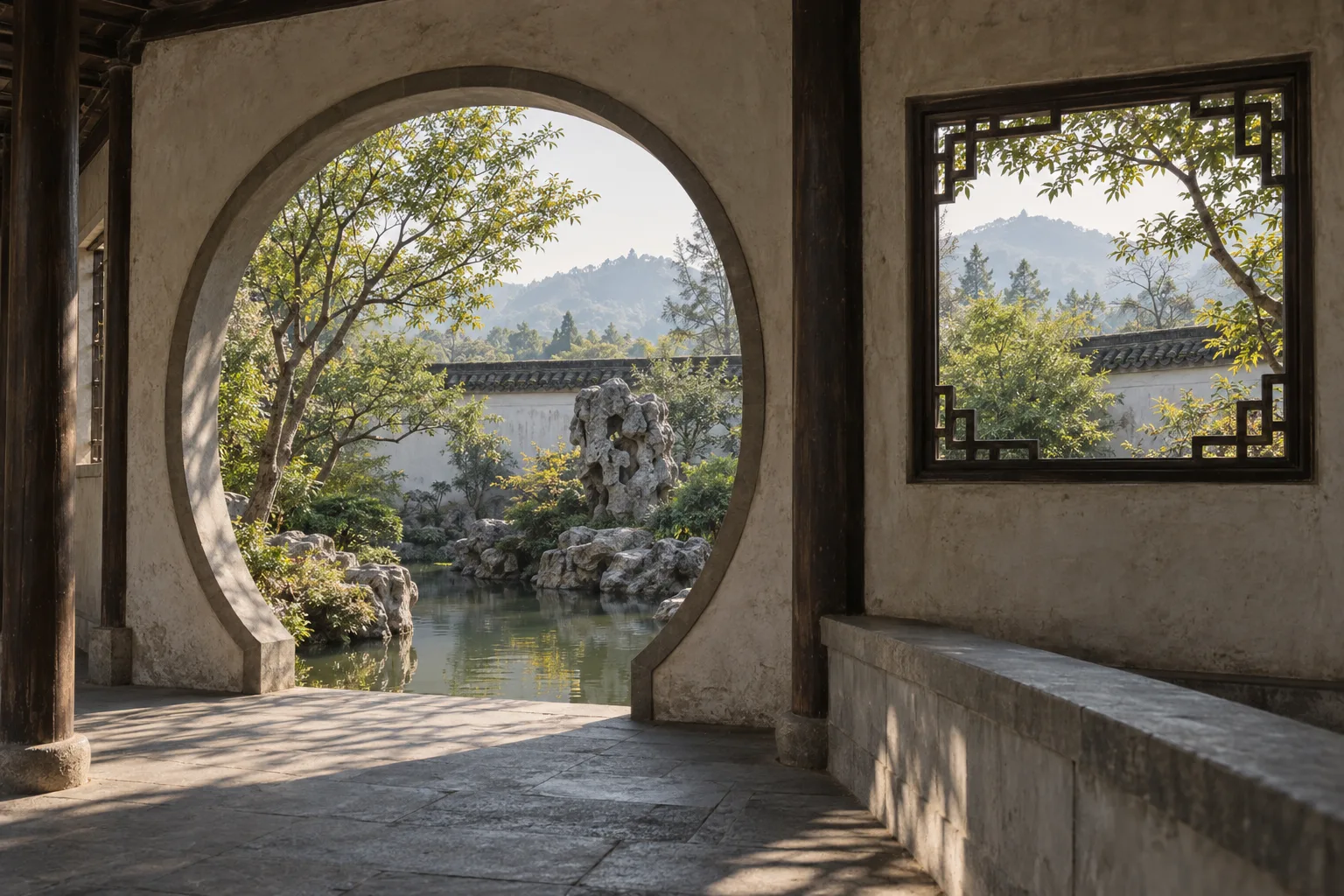
A doorway can frame a small garden; a distant hill can become part of it. Learn how position, openings and borrowed views guide the way a Chinese garden is seen.
Tea · 3 min
There is no single correct set of Chinese tea wares. Learn what a cup, gaiwan, teapot and serving pitcher do, then begin with only what you need.
Ritual · 2 min
A simple incense practice begins with one stick, a stable holder, and time to stay nearby while it burns.

Makers · 9 min
Jingdezhen has fired porcelain for a thousand years. We spent a week with the two people keeping that rhythm going.

Form · 3 min
In Chinese gardens and studies, a scholar's rock can evoke a mountain at a scale close enough to contemplate.