
Incense · 3 min read
What Are Chenxiang and Guanxiang? A Guide to Chinese Agarwood
Agarwood is a fragrant material from a tree; guanxiang is a Dongguan tradition within that larger story. The names describe different things.
BAI Atelier Editorial
Agarwood is the fragrant, resin-rich material formed in certain Aquilaria trees. In Chinese it is commonly called chenxiang (沉香). Guanxiang (莞香) belongs to the Dongguan story of that material: the national intangible heritage record identifies it as a prized local agarwood tradition, not a second botanical species.
The tree is not the finished incense
The Dongguan heritage record describes deliberate work on selected trees, a long period of formation, and harvesting followed by sorting and refining. It names different grades and forms. That is why a photograph of a living tree cannot tell you the scent or quality of a particular piece of agarwood. The record concerns one regional practice; it should not be turned into a universal recipe for all agarwood.
From material to finished fragrance
In the recorded Dongguan process, harvested material may be cleaned, sorted and used for heating, ground as powder, or made into incense sticks and other forms. A stick labelled ‘agarwood incense’ is therefore a finished product, not necessarily an unblended piece of wood. Ask what ingredients and method the maker actually declares.
Sources
Keep reading

The Meaning of Scholar's Rocks in Chinese Culture

Inside a Jingdezhen Studio: Where Tradition Meets Today

A Beginner's Guide to Incense Rituals at Home
A Chinese Tea Table, Explained: Vessels and Everyday Practice
How Chinese Gardens Shape a View: Frames and Borrowed Scenery
What Are the Four Treasures of the Chinese Study?
How to Look at Empty Space in Chinese Landscape Painting
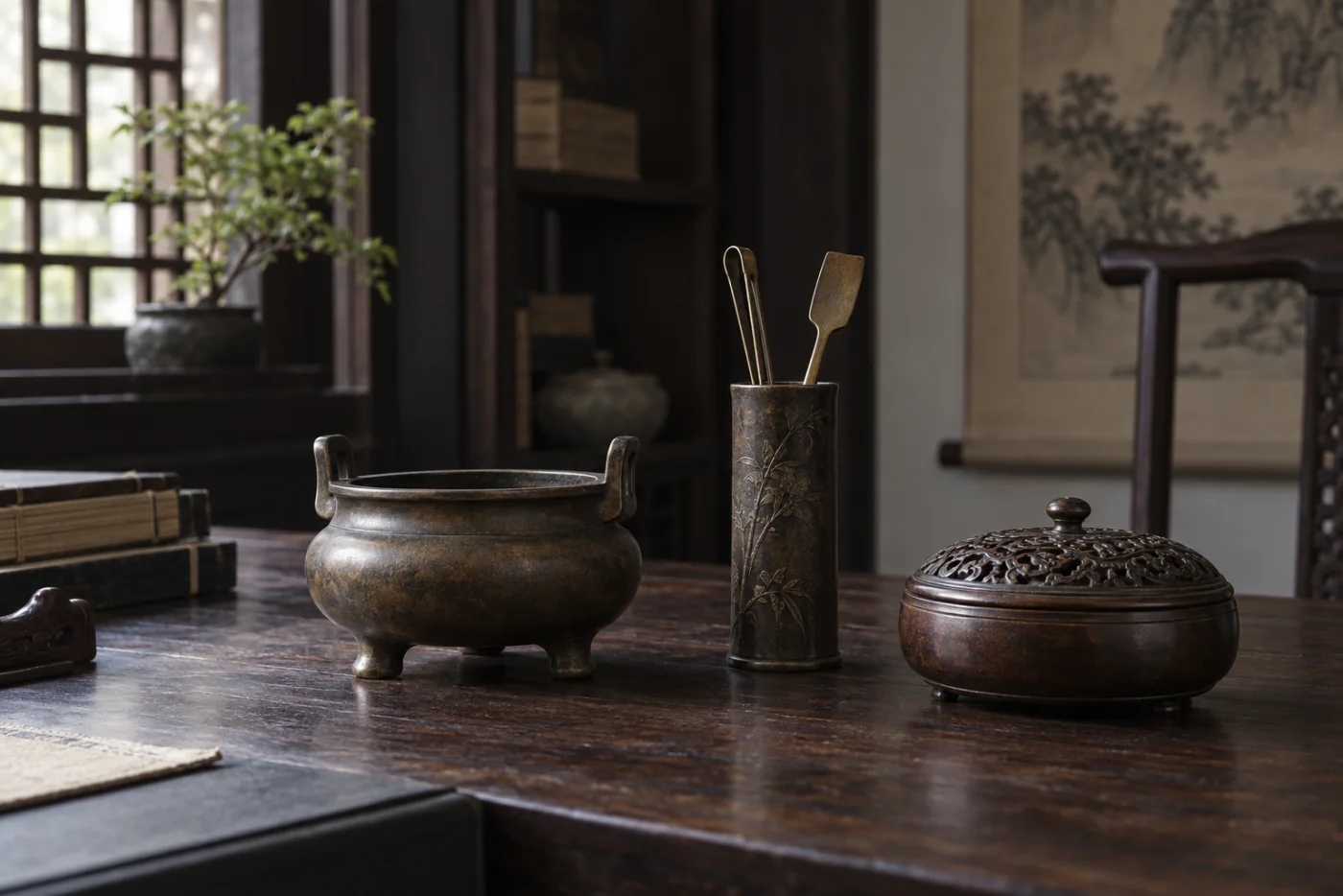
Incense Burner, Box and Tools: What Does Each Do?
The Craft of Wooden Windows in Suzhou Gardens
How to View a Chinese Handscroll
What Is Dougong in Chinese Architecture?
How Traditional Chinese Incense Is Made
How to Use Incense Sticks, Coils, Cones and Powder
The Six Types of Chinese Tea, Explained by Their Making
How to Brew Different Chinese Teas: Six Starting Points
How Jasmine Tea Gets Its Scent in Fuzhou
Why Does a Han Incense Burner Look Like a Mountain?
What Is Indirect Heating in Chinese Incense?
Chaozhou Gongfu Tea: A Regional Way of Serving Oolong
Song Dynasty Diancha: Tea Whisked in a Bowl
A Fragrant Pouch That Does Not Burn: Xuzhou Incense Sachets
How Did a Tang Incense Sphere Keep Its Cup Upright?
How Hand-Firing Shapes West Lake Longjing Tea
Why Is Roasting Part of Wuyi Rock Tea?
What Is Xiangzhuan, a Chinese Incense Seal?
Enshi Yulu: A Chinese Green Tea Fixed by Steam
Why Are Tieguanyin Leaves Shaken During Making?