
Incense · Object study · 4 min read
How Did a Tang Incense Sphere Keep Its Cup Upright?
A Tang silver incense sphere used nested moving rings to keep its inner cup level while the outer ball turned.
BAI Atelier Editorial
A Tang-period metal xiangnang could be a pierced sphere rather than an embroidered pouch. An exhibition report on a silver example from Famen Temple describes two perforated hemispheres joined into a ball, with a chain for hanging. A small cup for aromatic material sits inside.
Imagine turning the outer shell
The cup is linked to inner and outer moving rings. As the shell changes position, the suspended cup's weight helps keep it upright. Openwork in the shell lets fragrance pass outward. This explains the mechanical idea without implying that the device made hot incense safe to put anywhere. The particular large Famen Temple example may have hung in a room or on a saddle; the exhibition account treats those placements as possibilities, while smaller spheres could be worn.
Its engineering deserves attention, but so does its setting: this is an excavated, ornate silver object, not evidence that every household owned one. To see the Famen Temple sphere itself, use the exhibition link below. Our cover is a general incense image, not a photograph or reconstruction of that artefact.
Sources
Keep reading

The Meaning of Scholar's Rocks in Chinese Culture

Inside a Jingdezhen Studio: Where Tradition Meets Today

A Beginner's Guide to Incense Rituals at Home
A Chinese Tea Table, Explained: Vessels and Everyday Practice
How Chinese Gardens Shape a View: Frames and Borrowed Scenery
What Are the Four Treasures of the Chinese Study?
How to Look at Empty Space in Chinese Landscape Painting
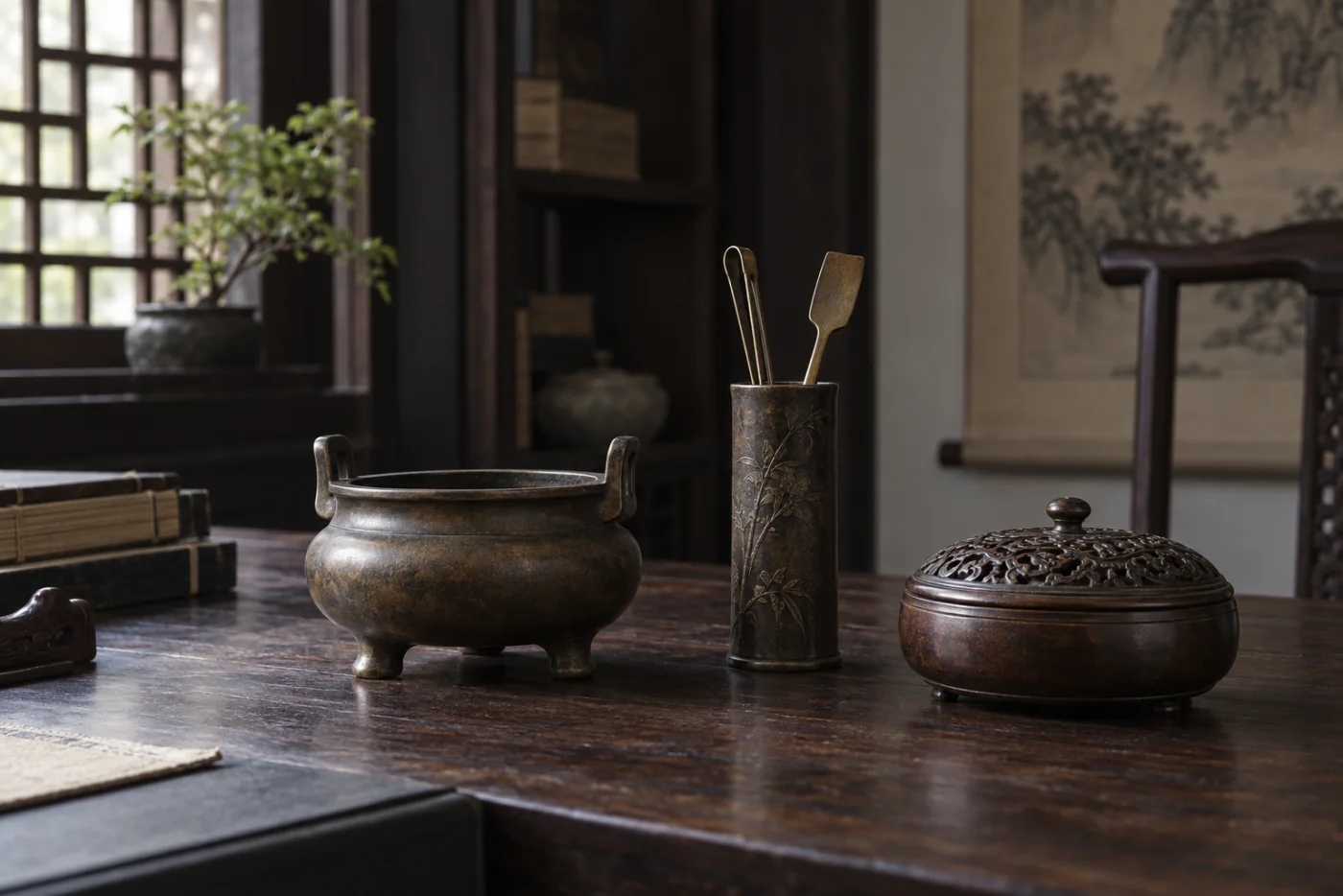
Incense Burner, Box and Tools: What Does Each Do?
The Craft of Wooden Windows in Suzhou Gardens
How to View a Chinese Handscroll
What Is Dougong in Chinese Architecture?
What Are Chenxiang and Guanxiang? A Guide to Chinese Agarwood
How Traditional Chinese Incense Is Made
How to Use Incense Sticks, Coils, Cones and Powder
The Six Types of Chinese Tea, Explained by Their Making
How to Brew Different Chinese Teas: Six Starting Points
How Jasmine Tea Gets Its Scent in Fuzhou
Why Does a Han Incense Burner Look Like a Mountain?
What Is Indirect Heating in Chinese Incense?
Chaozhou Gongfu Tea: A Regional Way of Serving Oolong
Song Dynasty Diancha: Tea Whisked in a Bowl
A Fragrant Pouch That Does Not Burn: Xuzhou Incense Sachets
How Hand-Firing Shapes West Lake Longjing Tea
Why Is Roasting Part of Wuyi Rock Tea?
What Is Xiangzhuan, a Chinese Incense Seal?
Enshi Yulu: A Chinese Green Tea Fixed by Steam
Why Are Tieguanyin Leaves Shaken During Making?