
Landscape · 3 min read
How to Look at Empty Space in Chinese Landscape Painting
An unpainted passage can suggest water or mist and give mountains room to recede. One Palace Museum painting offers a concrete way to see it.
BAI Atelier Editorial
In a Chinese landscape painting, an unpainted area is not necessarily an unfinished one. Its role depends on the work around it. In the Palace Museum's album of landscapes by Dong Qichang (董其昌), areas left for water and sky help separate nearby, middle and distant views. The small sheets can therefore feel far more expansive than their size.
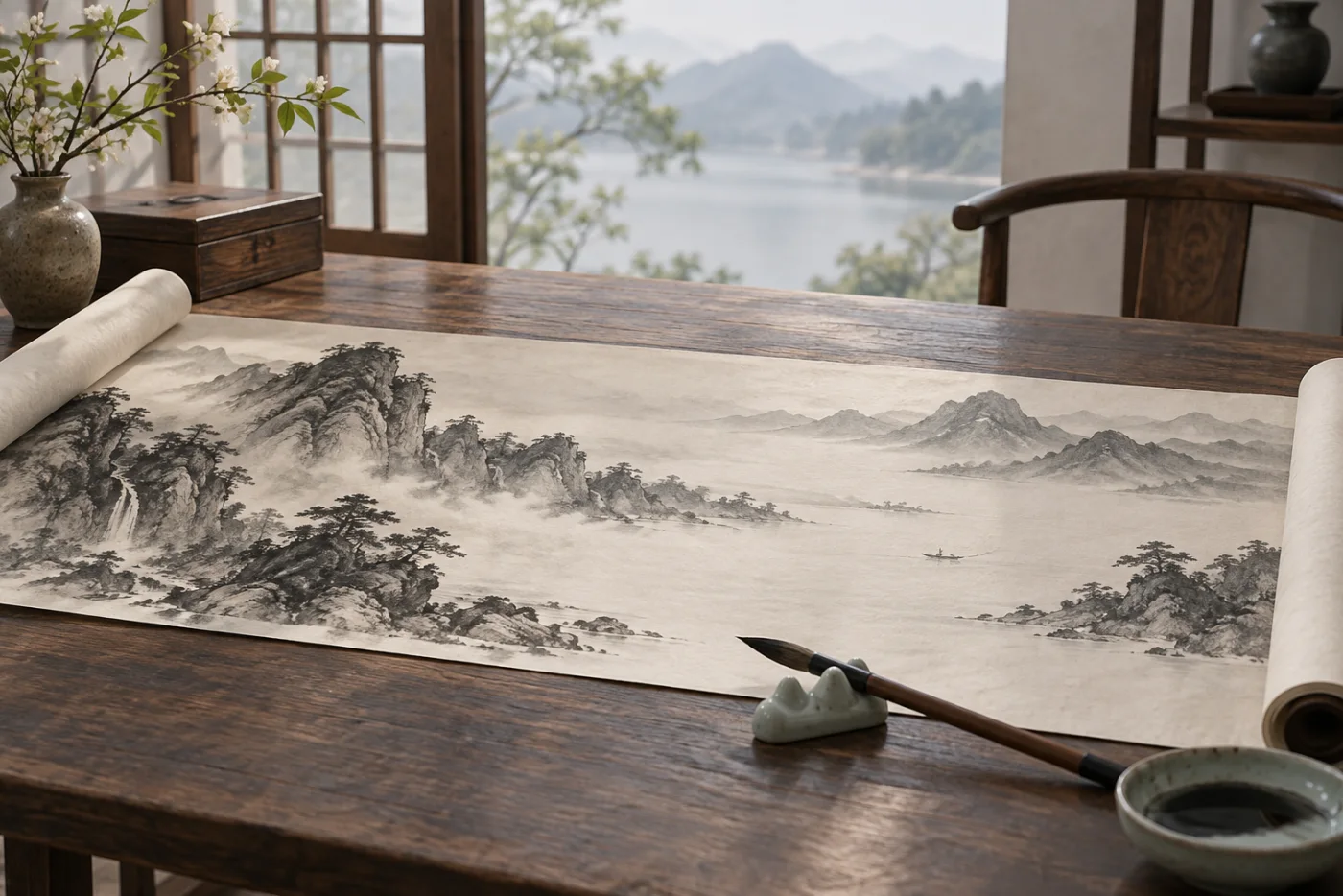
Start at a dark bank or mountain. Follow its edge until the ink stops. Does the open paper read as water below, air around a peak, or distance between two forms? There need not be a single answer in every painting. The relationship between marked and unmarked paper gives the eye a path through the image.
Try looking twice
- Find one unpainted passage between two inked forms.
- Cover it briefly. Do the mountains feel closer together, or does the water lose its breadth?
- Uncover it and look again. Notice how much of the distance comes from the paper itself.
Our earlier essay on garden views follows another way of directing attention: openings and paths arrange what a visitor sees in real space. Painting works on paper instead. Keeping the two settings distinct makes their shared interest in looking more interesting.
Sources
Keep reading

The Meaning of Scholar's Rocks in Chinese Culture

Inside a Jingdezhen Studio: Where Tradition Meets Today

A Beginner's Guide to Incense Rituals at Home
A Chinese Tea Table, Explained: Vessels and Everyday Practice
How Chinese Gardens Shape a View: Frames and Borrowed Scenery
What Are the Four Treasures of the Chinese Study?
Incense Burner, Box and Tools: What Does Each Do?
The Craft of Wooden Windows in Suzhou Gardens
How to View a Chinese Handscroll
What Is Dougong in Chinese Architecture?
What Are Chenxiang and Guanxiang? A Guide to Chinese Agarwood
How Traditional Chinese Incense Is Made
How to Use Incense Sticks, Coils, Cones and Powder
The Six Types of Chinese Tea, Explained by Their Making
How to Brew Different Chinese Teas: Six Starting Points
How Jasmine Tea Gets Its Scent in Fuzhou
Why Does a Han Incense Burner Look Like a Mountain?
What Is Indirect Heating in Chinese Incense?
Chaozhou Gongfu Tea: A Regional Way of Serving Oolong
Song Dynasty Diancha: Tea Whisked in a Bowl
A Fragrant Pouch That Does Not Burn: Xuzhou Incense Sachets
How Did a Tang Incense Sphere Keep Its Cup Upright?
How Hand-Firing Shapes West Lake Longjing Tea
Why Is Roasting Part of Wuyi Rock Tea?
What Is Xiangzhuan, a Chinese Incense Seal?
Enshi Yulu: A Chinese Green Tea Fixed by Steam
Why Are Tieguanyin Leaves Shaken During Making?