
Tea · 5 min read
How to Brew Different Chinese Teas: Six Starting Points
There is no universal water temperature or steeping time. Start with the tea's processing style, the producer's advice and the vessel you actually use.
BAI Atelier Editorial
For a first brew, use the producer's instructions if you have them. The following are broad starting choices for loose-leaf tea, drawn from Chinese tea teaching material and the differences among the six tea categories. A large cup with little leaf and a small gaiwan with more leaf need different steeping times; copying one number between them will not give the same cup.
Six useful starting points
- Green tea: try around 80°C (176°F), especially for tender leaves; let them open in a cup or glass and taste before they steep too long.
- White tea: try around 85–90°C (185–194°F), then adjust to leaf tenderness and the producer's advice. A delicate bud tea and mature-leaf white tea need not behave alike.
- Yellow tea: start around 85–90°C (185–194°F) and notice how quickly flavour develops.
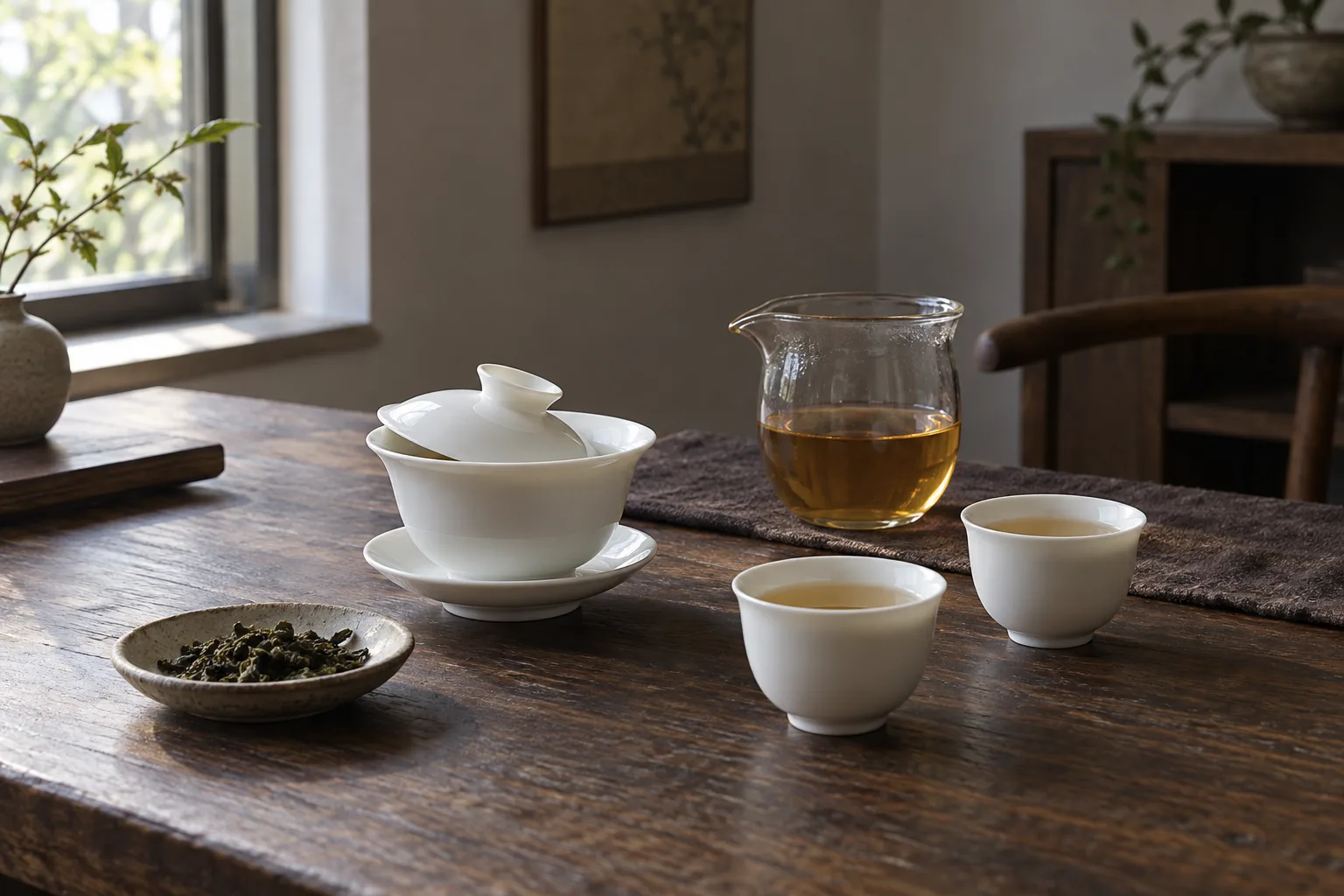
- Oolong tea: try around 95–100°C (203–212°F) in a gaiwan or small pot. Decant a short first infusion, then adjust later pours by taste.
- Red tea (hongcha): try around 90–95°C (194–203°F) in a cup or pot; strain or pour it off once the strength suits you.
- Dark tea (heicha): start with near-boiling water and room for the leaves to open. For a compressed tea, first separate the leaves carefully and follow its producer's preparation advice.
Change one thing at a time
If the first cup is too strong, use less leaf or a shorter steep next time. If it is too thin, change one of those in the other direction. Keep the same vessel and water amount while comparing. Tea material, leaf size, roast, storage and personal preference can all move the result, so these category notes are invitations to observe, not a claim of one correct temperature for every tea.
Sources
Keep reading

The Meaning of Scholar's Rocks in Chinese Culture

Inside a Jingdezhen Studio: Where Tradition Meets Today

A Beginner's Guide to Incense Rituals at Home
A Chinese Tea Table, Explained: Vessels and Everyday Practice
How Chinese Gardens Shape a View: Frames and Borrowed Scenery
What Are the Four Treasures of the Chinese Study?
How to Look at Empty Space in Chinese Landscape Painting
Incense Burner, Box and Tools: What Does Each Do?
The Craft of Wooden Windows in Suzhou Gardens
How to View a Chinese Handscroll
What Is Dougong in Chinese Architecture?
What Are Chenxiang and Guanxiang? A Guide to Chinese Agarwood
How Traditional Chinese Incense Is Made
How to Use Incense Sticks, Coils, Cones and Powder
The Six Types of Chinese Tea, Explained by Their Making
How Jasmine Tea Gets Its Scent in Fuzhou
Why Does a Han Incense Burner Look Like a Mountain?
What Is Indirect Heating in Chinese Incense?
Chaozhou Gongfu Tea: A Regional Way of Serving Oolong
Song Dynasty Diancha: Tea Whisked in a Bowl
A Fragrant Pouch That Does Not Burn: Xuzhou Incense Sachets
How Did a Tang Incense Sphere Keep Its Cup Upright?
How Hand-Firing Shapes West Lake Longjing Tea
Why Is Roasting Part of Wuyi Rock Tea?
What Is Xiangzhuan, a Chinese Incense Seal?
Enshi Yulu: A Chinese Green Tea Fixed by Steam
Why Are Tieguanyin Leaves Shaken During Making?