
Tea · Living tradition · 4 min read
Chaozhou Gongfu Tea: A Regional Way of Serving Oolong
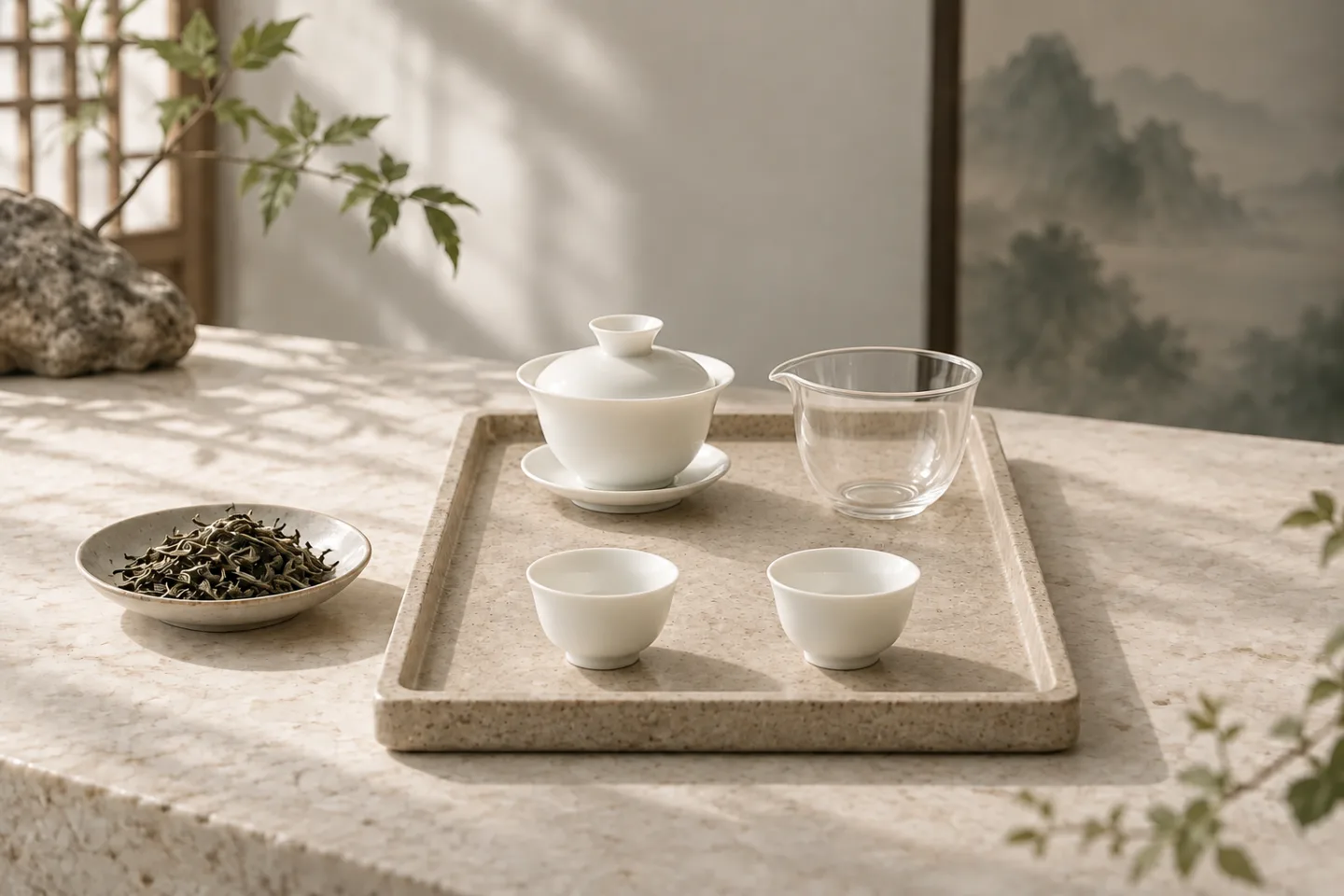
Chaozhou gongfu tea is a documented Chaoshan custom centred on preparing and sharing oolong tea; its formal sequence is one record of a living practice.
BAI Atelier Editorial
The Chinese national intangible heritage record identifies Chaozhou gongfu tea (潮州工夫茶艺) as a tea-preparation custom of the Chaoshan region in Guangdong. Oolong is its main tea. Here, ‘gongfu’ points to practiced attention in preparing and serving tea; it is not a seventh type of tea leaf.
What the heritage record shows
The official description moves from presenting the utensils and heating water through warming the vessel and cups, adding oolong, pouring water, distributing the liquor and inviting guests to taste. Its many named actions show how a social occasion can be organised around a small vessel and repeated shared servings. The recorded ceremonial sequence is not a rule that every family must perform every time it makes tea.
The heritage listing dates from 2008 and names Chaozhou's cultural centre as its safeguarding body. It also notes that simplified ways of preparing tea coexist with the fuller documented sequence. That is a reminder to see the practice as living and changeable, rather than as a museum performance frozen in one moment.
Sources
Keep reading

The Meaning of Scholar's Rocks in Chinese Culture

Inside a Jingdezhen Studio: Where Tradition Meets Today

A Beginner's Guide to Incense Rituals at Home
A Chinese Tea Table, Explained: Vessels and Everyday Practice
How Chinese Gardens Shape a View: Frames and Borrowed Scenery
What Are the Four Treasures of the Chinese Study?
How to Look at Empty Space in Chinese Landscape Painting
Incense Burner, Box and Tools: What Does Each Do?
The Craft of Wooden Windows in Suzhou Gardens
How to View a Chinese Handscroll
What Is Dougong in Chinese Architecture?
What Are Chenxiang and Guanxiang? A Guide to Chinese Agarwood
How Traditional Chinese Incense Is Made
How to Use Incense Sticks, Coils, Cones and Powder
The Six Types of Chinese Tea, Explained by Their Making
How to Brew Different Chinese Teas: Six Starting Points
How Jasmine Tea Gets Its Scent in Fuzhou
Why Does a Han Incense Burner Look Like a Mountain?
What Is Indirect Heating in Chinese Incense?
Song Dynasty Diancha: Tea Whisked in a Bowl
A Fragrant Pouch That Does Not Burn: Xuzhou Incense Sachets
How Did a Tang Incense Sphere Keep Its Cup Upright?
How Hand-Firing Shapes West Lake Longjing Tea
Why Is Roasting Part of Wuyi Rock Tea?
What Is Xiangzhuan, a Chinese Incense Seal?
Enshi Yulu: A Chinese Green Tea Fixed by Steam
Why Are Tieguanyin Leaves Shaken During Making?