
Architecture · 4 min read
The Craft of Wooden Windows in Suzhou Gardens
Wooden windows in Suzhou gardens manage light, air and movement as well as the view. Their construction is part of the experience.
BAI Atelier Editorial
A Suzhou garden window is both an opening and a crafted object. The Suzhou Municipal Bureau of Gardens and Greening describes several forms of wooden window, each suited to a different position in a building. Looking at how a window works adds another layer to the framed views discussed in our earlier garden essay.
The opening determines the job
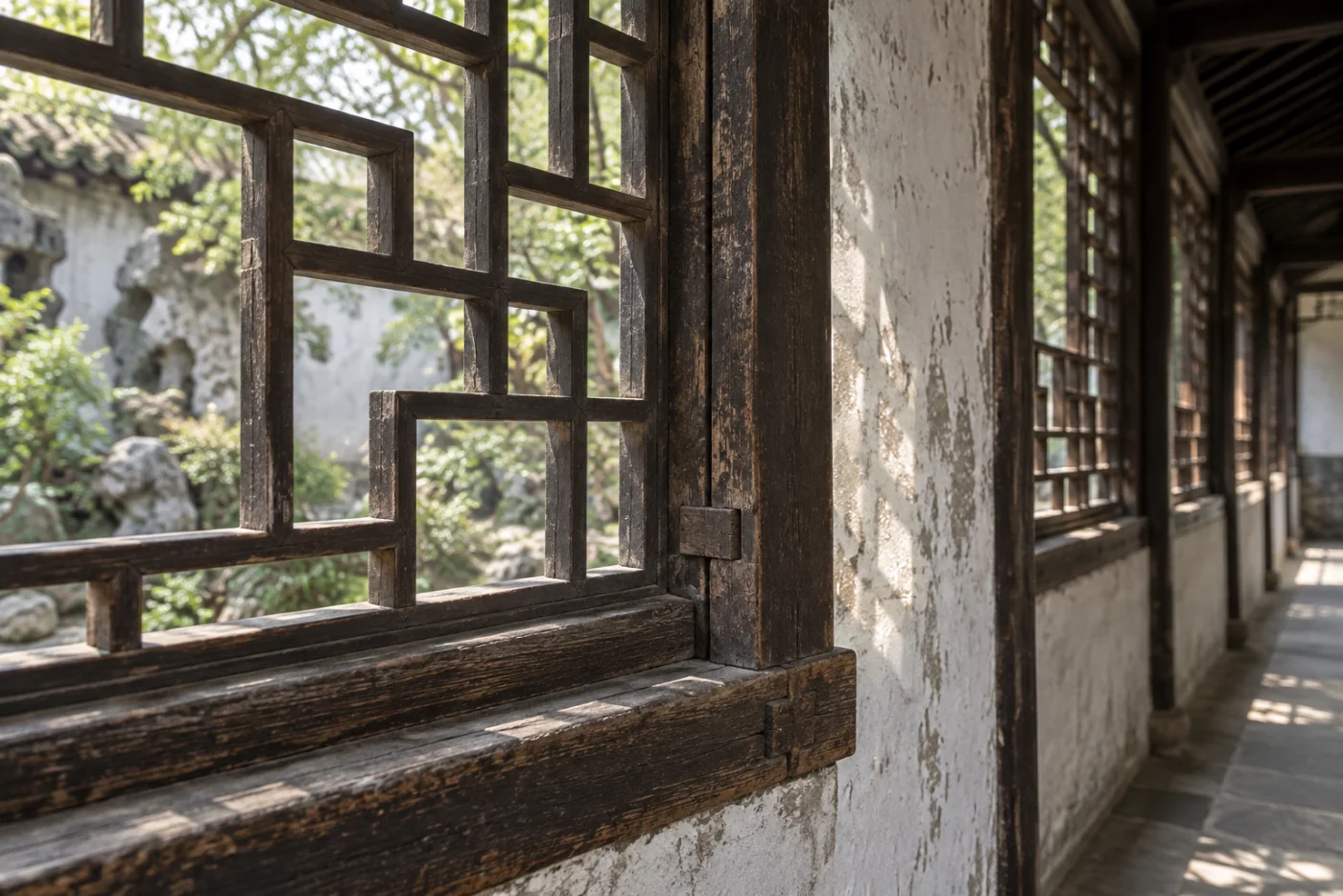
A long window (长窗, chángchuāng) can extend to the floor. In the garden bureau's account it may divide inside from outside; opened, it admits air and allows passage, while closed it can still bring in light and a view. A short window (短窗, duǎnchuāng) has a different proportion and is used in smaller rooms, corridors and pavilions. A high horizontal window (横风窗, héngfēngchuāng) can provide light above a taller opening.
These distinctions matter because a pattern is not merely decoration applied to a wall. Height, opening method and position influence how people move, how a room is lit and where the eye rests.
Materials change the pattern
The bureau describes the inner lattice, or xinzai (心仔), as narrow pieces of wood inside an outer frame. Paper, translucent shell sheets called mingwa (明瓦), and later glass could be fitted behind openings to admit light while offering protection from wind. The choice of filling affected how the lattice could be arranged and maintained.
In an existing garden, look first for a window's size and position. Then notice the wood pattern and what sits behind it. This reveals a practical craft decision before the opening becomes a picture of the landscape beyond.
Sources
Keep reading

The Meaning of Scholar's Rocks in Chinese Culture

Inside a Jingdezhen Studio: Where Tradition Meets Today

A Beginner's Guide to Incense Rituals at Home
A Chinese Tea Table, Explained: Vessels and Everyday Practice
How Chinese Gardens Shape a View: Frames and Borrowed Scenery
What Are the Four Treasures of the Chinese Study?
How to Look at Empty Space in Chinese Landscape Painting
Incense Burner, Box and Tools: What Does Each Do?
How to View a Chinese Handscroll
What Is Dougong in Chinese Architecture?
What Are Chenxiang and Guanxiang? A Guide to Chinese Agarwood
How Traditional Chinese Incense Is Made
How to Use Incense Sticks, Coils, Cones and Powder
The Six Types of Chinese Tea, Explained by Their Making
How to Brew Different Chinese Teas: Six Starting Points
How Jasmine Tea Gets Its Scent in Fuzhou
Why Does a Han Incense Burner Look Like a Mountain?
What Is Indirect Heating in Chinese Incense?
Chaozhou Gongfu Tea: A Regional Way of Serving Oolong
Song Dynasty Diancha: Tea Whisked in a Bowl
A Fragrant Pouch That Does Not Burn: Xuzhou Incense Sachets
How Did a Tang Incense Sphere Keep Its Cup Upright?
How Hand-Firing Shapes West Lake Longjing Tea
Why Is Roasting Part of Wuyi Rock Tea?
What Is Xiangzhuan, a Chinese Incense Seal?
Enshi Yulu: A Chinese Green Tea Fixed by Steam
Why Are Tieguanyin Leaves Shaken During Making?